
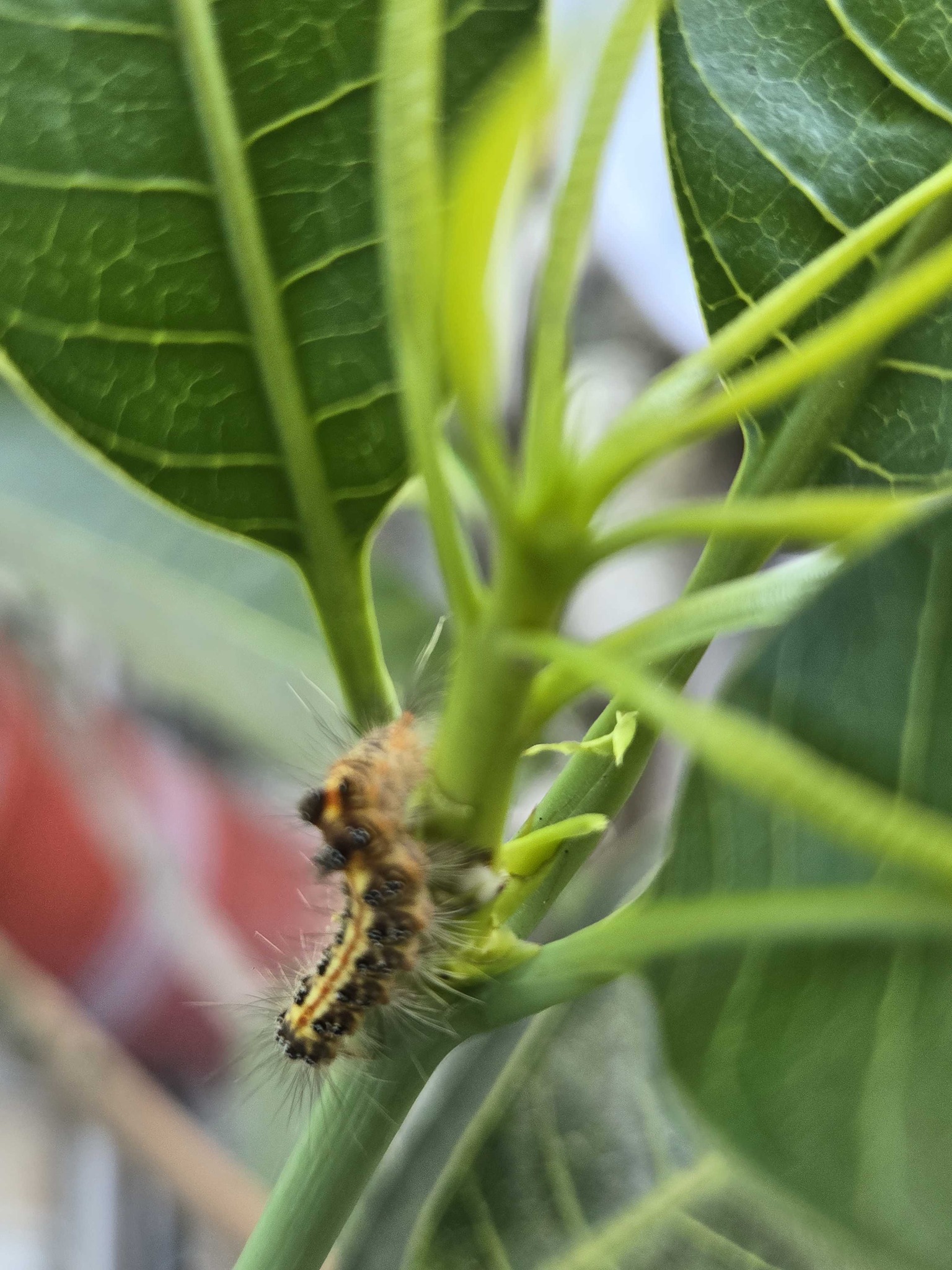
Tussock Moth Caterpillar (Yellow-based)
Orgyia postica
- Order & Family
- Order: Lepidoptera, Family: Erebidae
- Size
- 15 mm to 30 mm in length
Natural Habitat
Widely distributed in tropical and subtropical regions; commonly found on host plants including mango (Mangifera indica), litchi, and various ornamental trees.
Diet & Feeding
Polyphagous herbivore; feeds on a variety of plants including fruit trees, beans, and forest trees, primarily consuming the foliage.
Behavior Patterns
Larvae are active feeders often found on the underside of leaves. They undergo several molts before spinning a pupal cocoon. Adult males are winged while females are wingless and stay near their cocoons.
Risks & Benefits
Risks: Can be a significant agricultural pest causing defoliation. The larval hairs (setae) contain irritating chemicals and can cause painful rashes or contact dermatitis in humans. Benefits: Serves as a food source for birds and parasitic wasps.