
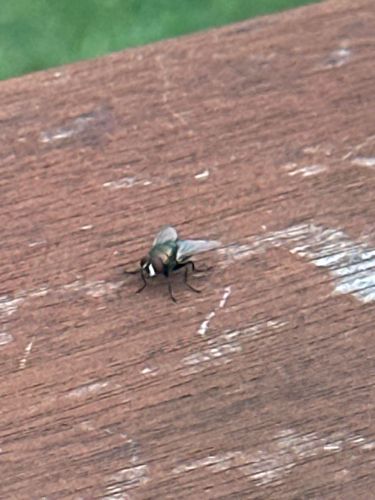
Blow Fly
Calliphoridae species (e.g., Calliphora vomitoria, Lucilia sericata)
- Order & Family
- Order: Diptera, Family: Calliphoridae
- Size
- Typically 4-16 mm (0.16-0.63 inches) in length.
Natural Habitat
Blow flies are found globally in a wide range of habitats, particularly where rotting organic material or carrion is present. This includes urban areas, rural environments, wooded areas, and near animal carcasses or waste.
Diet & Feeding
Adult blow flies feed on nectar, decaying organic matter, animal excrement, and carrion. Larvae (maggots) primarily feed on decaying flesh, although some species' larvae are parasites on living animals or other insects.
Behavior Patterns
Adult blow flies are active during the day, especially in warm weather. They are attracted to decaying organic matter for feeding and laying eggs. Larvae, or maggots, feed on the decaying material. Blow flies undergo complete metamorphosis: egg, larva (maggot), pupa, and adult.
Risks & Benefits
Potential risks include being vectors for disease-causing pathogens (e.g., bacteria like E. coli, Salmonella) due to their feeding habits on decaying matter and subsequent contact with human food surfaces. Some species can cause myiasis (infestation of living tissue) in animals and humans. Benefits include their ecological role as decomposers, helping to recycle nutrients from dead organisms. They are also used in forensic entomology to estimate time of death (Post Mortem Interval) and in maggot therapy for wound debridement in medicine.