
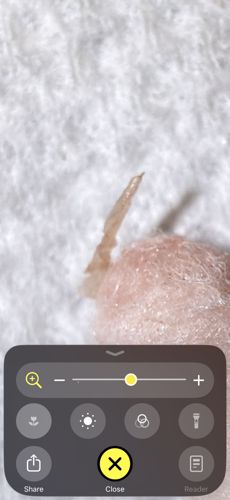
Community identification
Clothing moth larva (inside a casing)
Tinea pellionella
- Order & Family
- Order: Lepidoptera, Family: Tineidae
- Size
- Case usually 8mm to 10mm in length
Natural Habitat
Indoors, particularly in dark, undisturbed areas like closets, under furniture, or rugs.
Diet & Feeding
Animal-based fibers including wool, silk, fur, feathers, and hair.
Behavior Patterns
The larva constructs a portable protective case out of silk and fiber fragments. It drags this case along as it feeds and eventually pupates inside it.
Risks & Benefits
Risk: Significant household pest that causes damage to clothing, upholstery, and carpets. Benefit: Recycles animal proteins in natural ecosystems, though considered strictly undesirable in homes.