
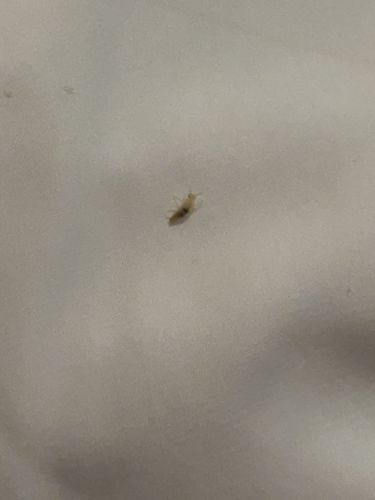
Booklouse / Psocid (most likely a Liposcelis species)
Liposcelis spp.
- Order & Family
- Order: Psocoptera, Family: Liposcelididae (most likely)
- Size
- Typically 1-2 mm in length.
Natural Habitat
Booklice thrive in damp, warm, and humid environments. Common habitats include areas with high humidity, such as basements, bathrooms, storage areas, attics, and around leaky pipes. They can also be found in old books, stored food products, and new homes where plaster or wood is still drying.
Diet & Feeding
Booklice feed on microscopic mold, fungi, dead insect matter, pollen, starchy materials, and other organic debris. They are known to infest books, paper, wallpaper, grains, and flour that have developed mold.
Behavior Patterns
Booklice are often found in damp, warm, and undisturbed environments, feeding on mold, fungi, and starchy materials. They are not typically found in large, visible infestations unless conditions are very favorable for their growth. They are mostly nocturnal and can be found in storage areas, pantries, and sometimes in new constructions where building materials are still off-gassing moisture.
Risks & Benefits
Risks: Booklice are generally considered nuisance pests. They do not bite people, transmit diseases, or cause structural damage. However, large infestations can damage books, paper, and food products by contaminating them with their excretions and bodies, or by feeding on the molds that grow on these items. Their presence can also indicate a high humidity problem in a dwelling, which can lead to mold growth. Benefits: In natural environments, they play a role as decomposers, feeding on decaying organic matter. However, in human dwellings, their benefits are negligible.