
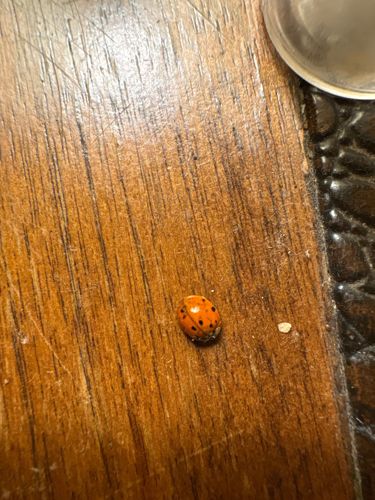
Ladybug or Ladybird Beetle (likely Harmonia axyridis, the Harlequin/Asian Lady Beetle, given the slight variation in spots and commonality as an indoor invader)
Coccinellidae (family), likely Harmonia axyridis (species)
- Order & Family
- Order: Coleoptera, Family: Coccinellidae
- Size
- Typically 0.8 to 10 mm (0.03 to 0.4 inches) in length, varying by species. The one in the image appears to be on the smaller to medium side within this range.
Natural Habitat
Gardens, agricultural fields, meadows, forests, and urban areas where there are abundant aphids or other small insects. In colder months, they often seek shelter indoors, sometimes in very large numbers.
Diet & Feeding
Primarily predatory, feeding on soft-bodied insects such as aphids, scale insects, mealybugs, and mites. They also consume pollen and nectar, especially when prey is scarce.
Behavior Patterns
Ladybugs often overwinter as adults in sheltered locations, sometimes aggregating in large numbers. They are generally slow-moving, especially when cold. When threatened, they may play dead or excrete a yellowish fluid (reflex bleeding) that contains an alkaloid, which is noxious to predators.
Risks & Benefits
Benefits: Highly beneficial as biological control agents in agriculture and gardens, helping to control pest populations naturally. Risks: The Asian Lady Beetle (Harmonia axyridis) can become a household nuisance when they overwinter indoors, may emit a foul odor and stain surfaces with their defensive fluid, and can sometimes bite (though not harmful to humans). In some cases, large aggregations can trigger allergic reactions in sensitive individuals.