
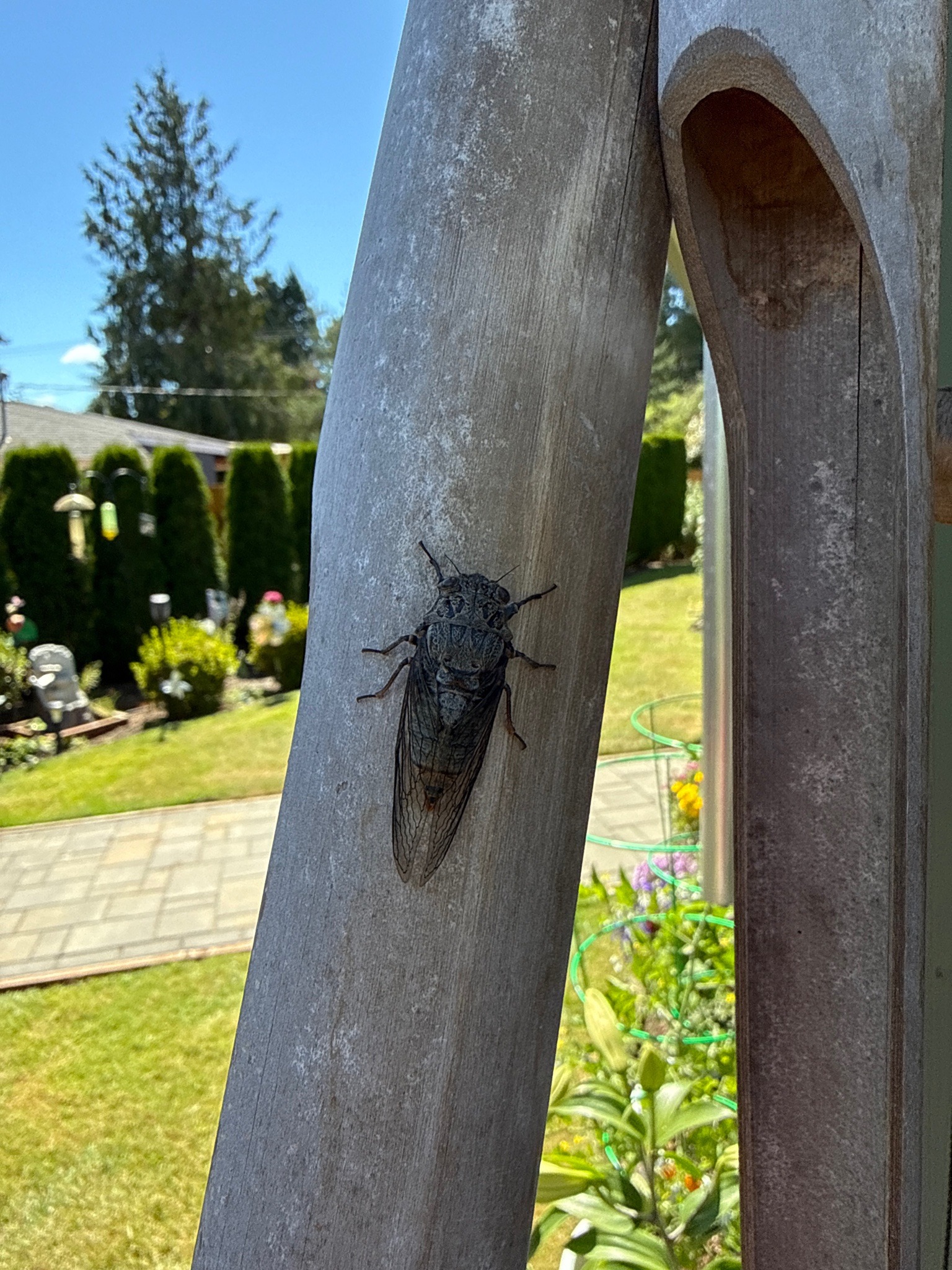
Cicada
Cicadidae (family)
- Order & Family
- Hemiptera: Cicadidae
- Size
- 2 to 5 cm (0.8 to 2 inches) in length, depending on the specific species.
Natural Habitat
Found globally in temperate and tropical regions, primarily in areas with trees and woody shrubs where they can lay eggs and nymphs can burrow into the soil.
Diet & Feeding
Nymphs live underground and feed on the xylem sap from the roots of perennial plants, while adults feed on plant sap using piercing-sucking mouthparts.
Behavior Patterns
Known for the loud buzzing or clicking sounds produced by males using drum-like organs called tymbals. They have unique life cycles where nymphs spend years underground before emerging, molting into adults, mating, and dying within a few weeks.
Risks & Benefits
Harmless to humans as they do not bite or sting. They provide a significant food source for birds and other wildlife, and their emergence helps aerate the soil and add nutrients to the ecosystem, though heavy infestations can occasionally damage young trees during egg-laying.