
Community identification
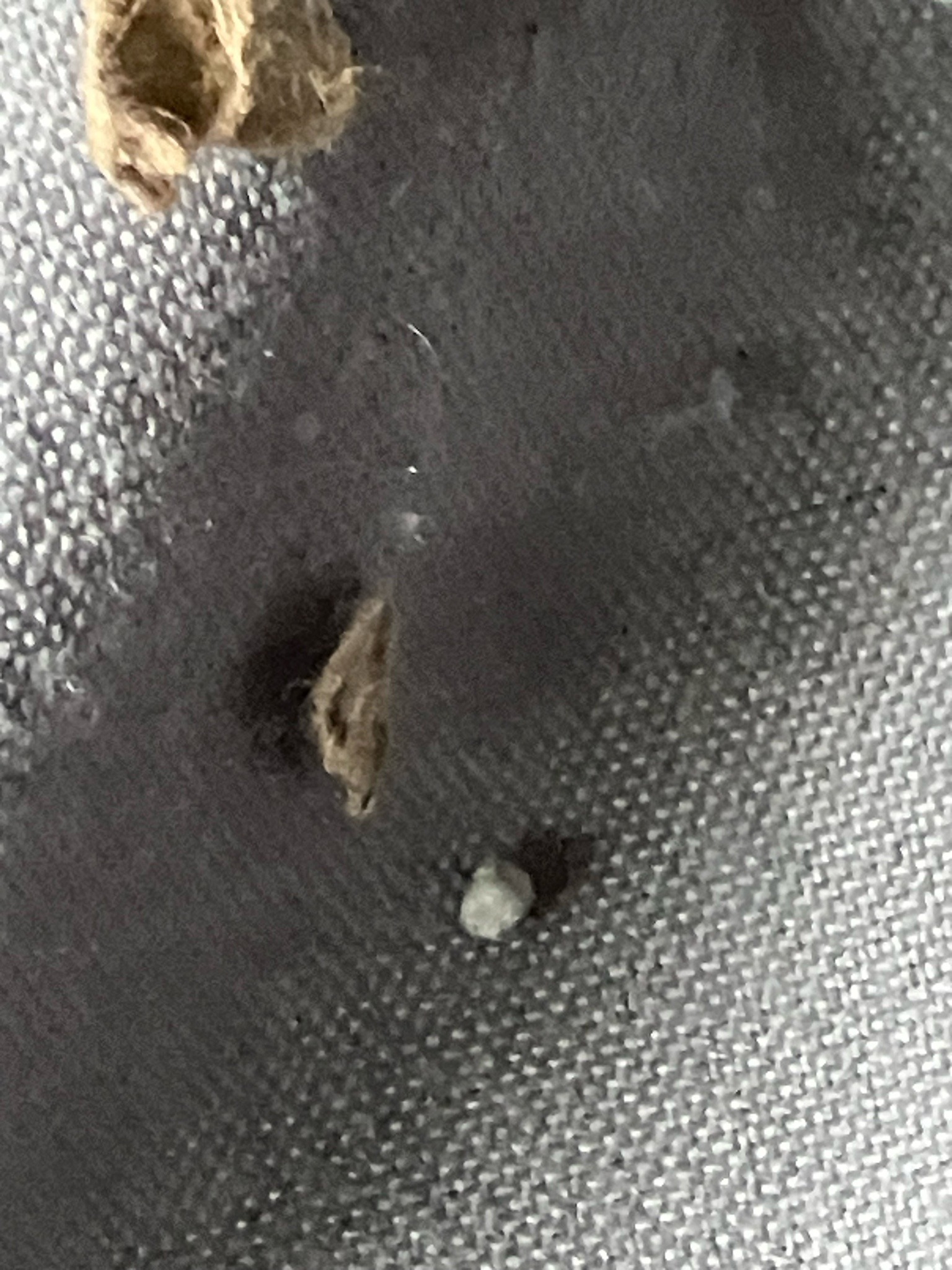
Case-bearing clothes moth (larva)
Tinea pellionella
- Order & Family
- Lepidoptera: Tineidae
- Size
- Larvae grow to approximately 8-10 mm; their portable cases are similar in size.
Natural Habitat
Indoor environments, particularly in closets, drawers, or under rugs and furniture where natural fibers are stored.
Diet & Feeding
Larvae feed on natural fibers such as wool, silk, fur, feathers, and hair. They primarily consume keratin-based products.
Behavior Patterns
The larva constructs a protective silk case covered in fragments of the fiber it is eating. It drags this case around as it feeds and remains inside until it pupates. They prefer dark, undisturbed areas.
Risks & Benefits
Risks include significant damage to expensive clothing, rugs, and upholstery made from animal fibers. They have no known benefits to humans or indoor ecosystems and are considered structural pests.