
Community identification
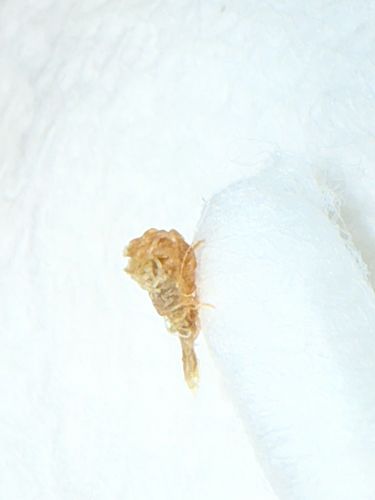
Webbing Clothes Moth Larva (specifically the casing)
Tineola bisselliella
- Order & Family
- Lepidoptera, Tineidae
- Size
- Larvae are typically about 10-12 mm (approx. 0.5 inches) long when fully grown.
Natural Habitat
Dark, quiet areas within homes such as closets, drawers, storage chests, and under carpets where natural fibers (wool, silk, fur) are stored.
Diet & Feeding
They feed on keratin-rich natural fibers, including wool, fur, silk, leather, feathers, and occasionally cotton or linen if soiled with food stains or sweat.
Behavior Patterns
The larvae spin silken tubes or cases (like the one pictured) for protection, blending in with the fabric they are eating. They avoid light and are rarely seen unless disturbed.
Risks & Benefits
They are a significant household pest that causes irreversible damage to expensive clothing, rugs, and upholstery. They pose no direct health threat to humans (they do not bite or sting) but can destroy valuable property.