
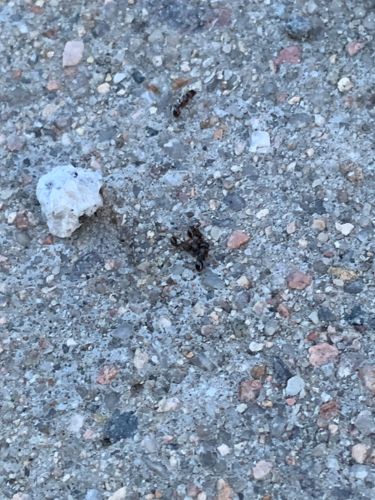
Ant
Formicidae (family level, as specific genus/species is hard to determine from the image)
- Order & Family
- Order: Hymenoptera, Family: Formicidae
- Size
- Typically from 2 mm to 25 mm (0.08 to 1 inch) in length, depending on the species and caste.
Natural Habitat
Ants are found in almost all terrestrial habitats around the world, from forests and grasslands to deserts and urban environments. They typically build nests underground, in wood, under rocks, or within artificial structures. Their preference for specific micro-habitats depends on the species.
Diet & Feeding
Ants are largely omnivorous, with their diet varying significantly by species. Many consume nectar, seeds, fungi, or small insects (living or dead). Some species are specialized, like leafcutter ants which farm fungi, or others that tend to aphids for their honeydew.
Behavior Patterns
Ants are social insects that live in colonies, which can range in size from a few dozen to millions of individuals. They are known for their highly organized societies, division of labor, and complex communication methods, often using chemical signals (pheromones) to guide foraging parties, warn of dangers, and identify nestmates. They are highly industrious, continuously foraging for food and expanding their nests. Many species exhibit strong territoriality.
Risks & Benefits
Risks: Some ant species can be considered pests when they invade homes or gardens. Certain species, like fire ants, have painful stings. Carpenter ants can damage wooden structures by excavating nests. Benefits: Ants play crucial roles in ecosystems as important decomposers, aerators of soil, and dispersers of seeds. They are also a food source for many other animals and can help control populations of other insects.