
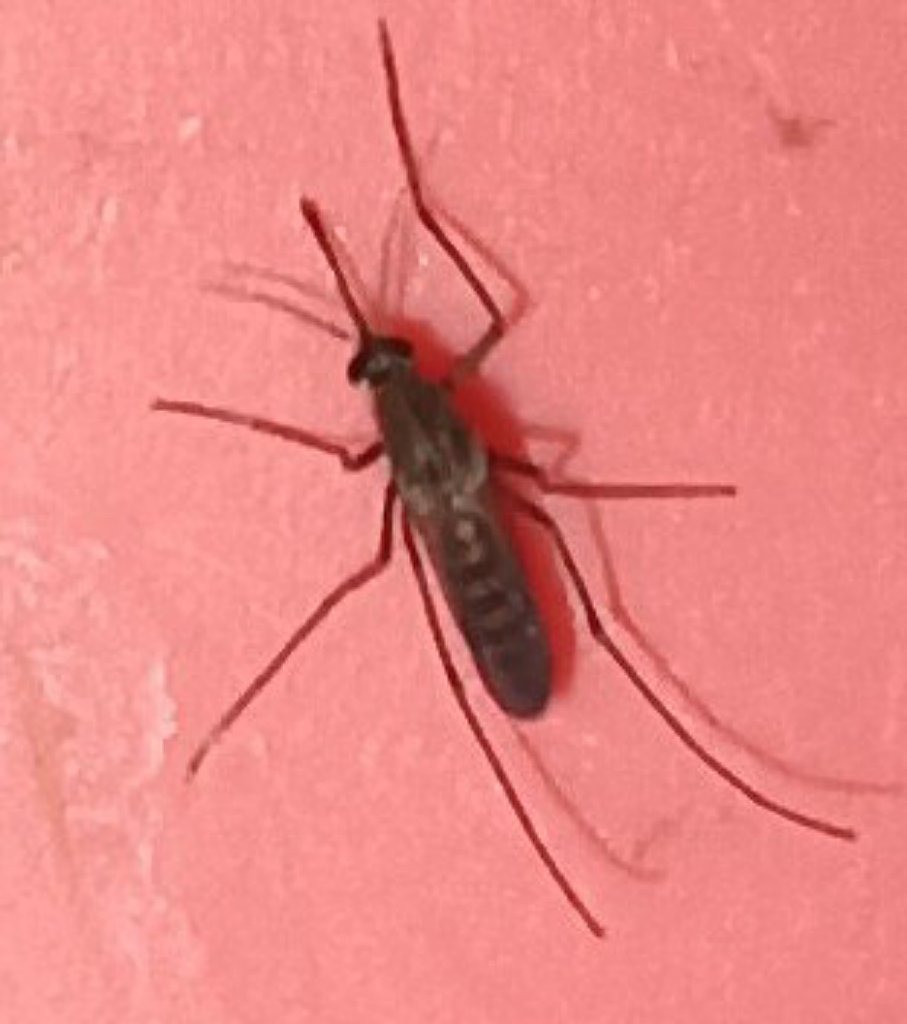
Community identification
Non-biting midge
Chironomus plumosus (common species representation)
- Order & Family
- Order: Diptera, Family: Chironomidae
- Size
- Typically 1mm to 20mm in length depending on the species.
Natural Habitat
Found near bodies of water such as lakes, marshes, and ponds where larvae live in bottom sediments.
Diet & Feeding
Larvae (bloodworms) feed on organic debris and algae; adults often do not feed at all or only consume nectar/liquids.
Behavior Patterns
Often form large swarms at dusk or dawn for mating. They are attracted to lights at night and may rest on walls or windows.
Risks & Benefits
They do not bite or transmit diseases to humans. They are beneficial as a major food source for fish and birds, and larvae help recycle organic matter in aquatic systems.