
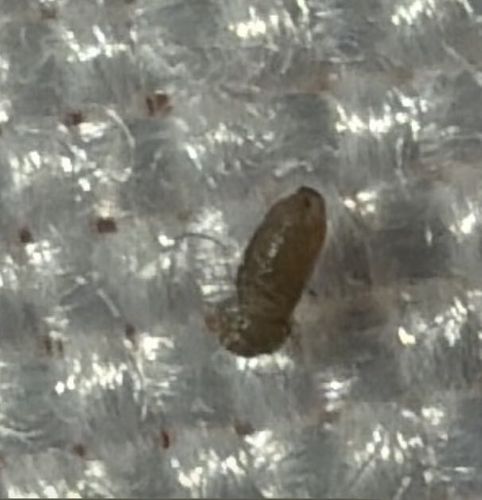
Booklouse (or Psocid)
Liposcelis spp.
- Order & Family
- Order: Psocodea (formerly Psocoptera), Family: Liposcelididae
- Size
- Very small/minute; typically 1 mm to 2 mm in length.
Natural Habitat
Found in warm, damp environments with high humidity like bathrooms, kitchens, basements, or near leaky pipes. They often live in wall voids, on damp paper (old books), or in stored food products.
Diet & Feeding
They feed on microscopic molds, fungi, starches, and organic debris found on paper, wallpaper paste, fabric, and stored grains.
Behavior Patterns
Booklice are wingless (most household species), soft-bodied insects that run quickly rather than flying or jumping. They require moisture to survive and are often an indicator of high humidity or mold growth.
Risks & Benefits
Risks: Generally harmless to humans and pets (no biting or disease transmission), but can contaminate stored food and cause annoyance in large numbers. Indicates moisture issues. Benefits: In nature, they help break down organic matter.