
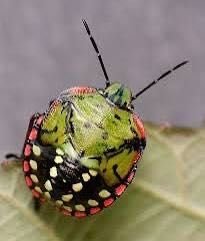
Southern Green Stink Bug Nymph
Nezara viridula (nymphal stage)
- Order & Family
- Hemiptera (Order), Pentatomidae (Family)
- Size
- Nymphs vary in size from approximately 1-12 mm, growing larger with each instar before reaching adult size.
Natural Habitat
Agricultural fields, gardens, orchards, and areas with lush vegetation. They are commonly found on host plants such as beans, tomatoes, corn, cotton, and various fruit trees.
Diet & Feeding
Herbivorous. They feed on a wide variety of plants, including many fruits, vegetables, and field crops, by piercing the plant tissue with their mouthparts (rostrum) and sucking out the plant juices.
Behavior Patterns
Nymphs typically remain on the host plants where they hatch. As they mature, they undergo several instars (molting stages), with each stage bringing a change in color and size. Adults are known to fly. They overwinter as adults in sheltered locations and emerge in spring to lay eggs.
Risks & Benefits
Potential risks: Considered a significant agricultural pest due to the damage they cause to crops. Their feeding can lead to stunted growth, deformed fruits, premature fruit drop, and introduction of pathogens. Potential benefits: None significant in pest management context, as they are primarily pests. However, as part of the ecosystem, they contribute to the food chain for other insects and birds.