
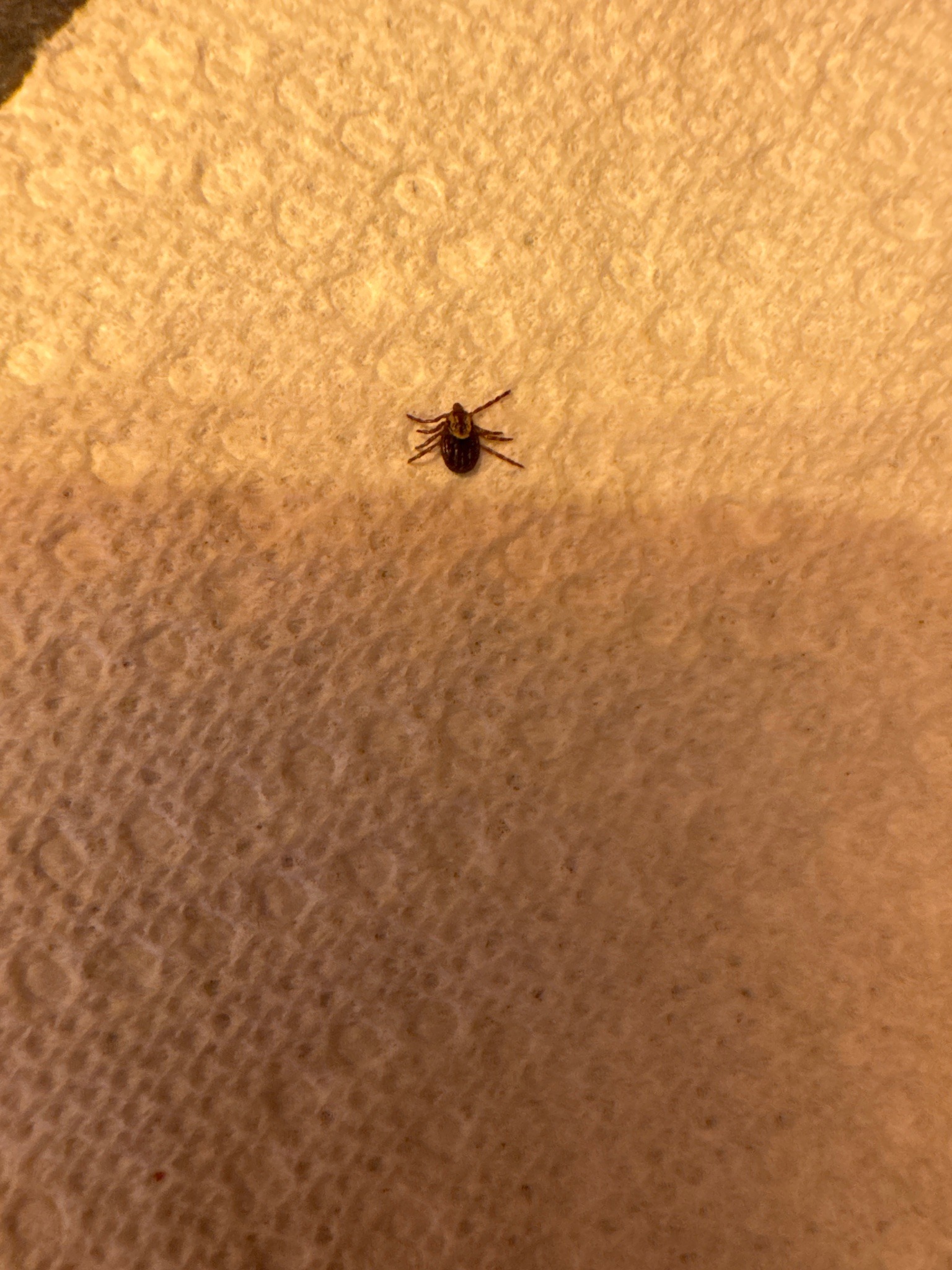
Community identification
American Dog Tick
Dermacentor variabilis
- Order & Family
- Ixodida, Ixodidae
- Size
- 3 mm to 5 mm (unfed), up to 15 mm (fully engorged)
Natural Habitat
Tall grass, marshes, and areas of low vegetation near forest edges or walkways where animals travel.
Diet & Feeding
Obligate blood-feeders; larvae and nymphs feed on small mammals like rodents, while adults prefer larger mammals such as dogs, cattle, and humans.
Behavior Patterns
They use a strategy called questing where they climb to the tips of grass to wait for a host to brush by. They have a three-host life cycle that can take up to two years to complete.
Risks & Benefits
Primary vector for Rocky Mountain spotted fever and tularemia. Their saliva can also cause tick paralysis in hosts. They provide little ecological benefit beyond being a minor food source for some birds and reptiles.