
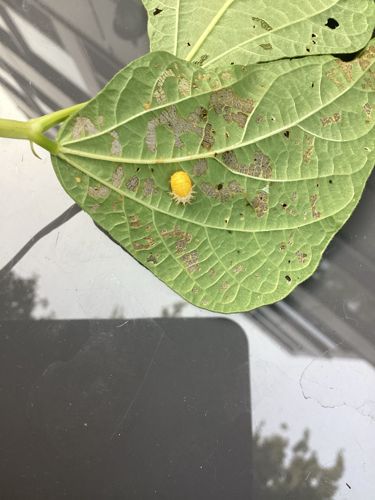
Mexican Bean Beetle Larva
Epilachna varivestis
- Order & Family
- Order: Coleoptera, Family: Coccinellidae (Lady Beetles)
- Size
- Larvae typically range from 1/16 to 1/3 inch (1.6mm to 8.5mm) in length. Adults are about 1/4 to 1/3 inch (6 to 8.5 mm) long.
Natural Habitat
Agricultural fields, gardens, and any areas where host legume plants are grown.
Diet & Feeding
In all life stages (larva and adult), the Mexican Bean Beetle feeds exclusively on the leaves of legumes, including beans (common beans, lima beans, snap beans, etc.), cowpeas, soybeans, and sometimes clover and alfalfa. The larva in the image appears to be actively feeding, as indicated by the damage to the leaf.
Behavior Patterns
This specific larva is likely still in the feeding stage, consuming plant material to grow before pupating. Adults are mobile and will fly to find mates and new host plants. They typically lay eggs on the undersides of leaves.
Risks & Benefits
Risks: The Mexican Bean Beetle is a significant agricultural pest. Both the larvae and adults feed on the leaves of bean plants, causing skeletonization (eating away the green tissue between veins) and defoliation, which can severely reduce crop yields. Benefits: There are no direct benefits to humans or the ecosystem from this specific insect; it is primarily known as a pest.