
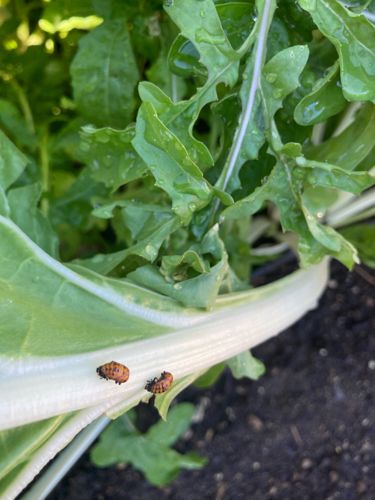
Ladybug Larva (specifically, likely a member of the Coccinellidae family, given the appearance and context)
Various species within the family Coccinellidae (e.g., Hippodamia convergens, Coccinella septempunctata, Adalia bipunctata) - specific species cannot be determined from the larva stage alone.
- Order & Family
- Order: Coleoptera, Family: Coccinellidae
- Size
- Typically 1-10 mm, depending on the species and larval instar (stage of development). The ones in the image appear to be a few millimeters long.
Natural Habitat
Gardens, agricultural fields, meadows, forests – anywhere their prey (like aphids) are found, particularly on plants. They are commonly found on the undersides of leaves or along stems.
Diet & Feeding
Mainly soft-bodied insects, especially aphids, but also scale insects, mealybugs, and mites. They are beneficial predators in gardens.
Behavior Patterns
Ladybug larvae are predatory and will actively hunt for soft-bodied insects. They are quite voracious eaters. As they grow, they will molt several times before pupating. The pupa stage is often attached to leaves or stems and can look like a small dried berry or bird dropping, and this is the stage before they emerge as adult ladybugs. They are generally slow-moving but persistent hunters.
Risks & Benefits
Ladybug larvae are highly beneficial insects. They are natural predators of many common garden pests like aphids, helping to control pest populations without the need for chemical pesticides. There are no known risks to humans.