
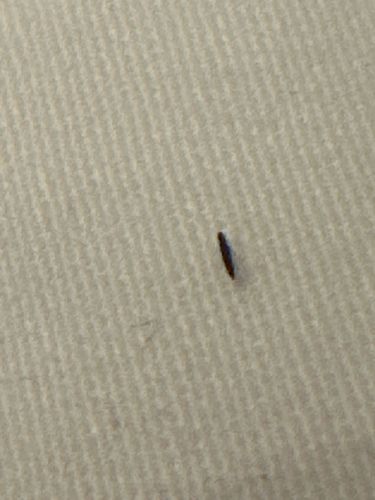
Carpet Beetle Larva
There are several species of carpet beetles, common ones include Dermestes lardarius (Larder beetle), Anthrenus verbasci (Varied carpet beetle), and Attagenus unicolor (Black carpet beetle). Without more detail or size reference, a specific species cannot be determined definitively from the image.
- Order & Family
- Order: Coleoptera, Family: Dermestidae
- Size
- Larvae typically range from 2 mm to 5 mm (0.08 to 0.2 inches) in length, depending on the species and developmental stage. They are typically elongated and somewhat grub-like, often covered in bristles.
Natural Habitat
Indoors, carpet beetle larvae are commonly found in homes, museums, and warehouses. They inhabit carpets, rugs, upholstered furniture, closets, attics, and any area where lint, dust, or other organic debris accumulates. Outdoors, they may be found in bird nests or animal carcasses.
Diet & Feeding
Carpet beetle larvae are scavengers, feeding on a wide variety of organic materials including natural fibers (wool, silk, felt, fur, feathers), animal products (dead insects, pet hair, dried meat), and stored food products (cereals, dried fruits, pet food). They are particularly fond of keratin-containing materials.
Behavior Patterns
Larvae of carpet beetles are often found in dark, undisturbed areas. They are slow-moving and prefer to hide in cracks, crevices, or under furniture where they can feed on accumulated debris. They undergo complete metamorphosis with egg, larval, pupal, and adult stages. The larval stage is the one that causes damage.
Risks & Benefits
Risks: Carpet beetle larvae can be significant pests, causing damage to textiles, clothing, carpets, and museum specimens made of natural fibers. They do not bite or transmit diseases to humans but can cause allergic reactions (dermatitis) in some individuals due to their shed skins or hairs. Benefits: In nature, they play a role as decomposers, helping to break down organic matter. However, their presence indoors is generally considered a nuisance and damaging.