
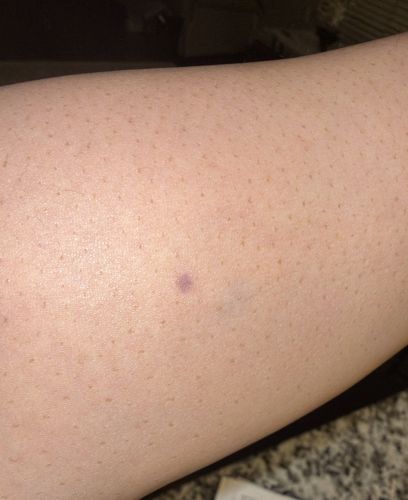
Community identification
Inconclusive (Requires specimen for identification)
Unknown
- Order & Family
- Various potential (e.g., Siphonaptera, Hemiptera, Acari)
- Size
- Common biting pests range from 1mm to 7mm
Natural Habitat
The image shows a skin mark/bruise, not an insect. Potential biters vary from indoor environments (bedding/carpet) to outdoor vegetation.
Diet & Feeding
If this is a bite from a hematophagous insect, they feed on mammalian or avian blood.
Behavior Patterns
Biting insects often seek hosts during specific times (nocturnal vs. diurnal) and use heat or CO2 sensors to locate blood sources.
Risks & Benefits
Risks include localized irritation, itching, or potential transmission of pathogens depending on the species; benefits are ecological (e.g., serving as a food source for other animals). Note: Seek medical advice if you experience swelling, spreading redness, fever, or signs of an allergic reaction.