
Community identification
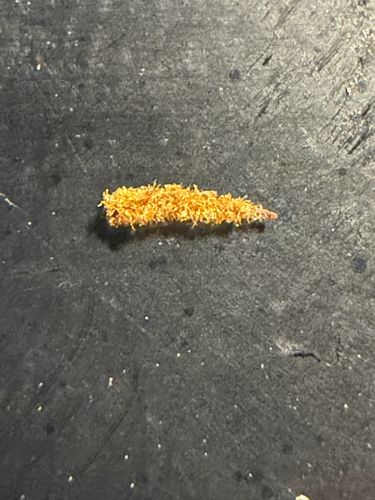
Case-bearing Clothes Moth Larva
Tinea pellionella
- Order & Family
- Lepidoptera: Tineidae
- Size
- Larvae are typically 5 to 10 mm in length.
Natural Habitat
Indoor environments such as closets, basements, and storage areas where clothing, rugs, or upholstery are kept.
Diet & Feeding
Keratin-rich animal products including wool, fur, feathers, silk, hair, and leather. This specific specimen appears to have constructed its case using orange fibers from a garment or carpet.
Behavior Patterns
The larva spins a protective silken case around itself, incorporating fibers from the material it is feeding on for camouflage. It carries this case wherever it goes. They prefer dark, undisturbed areas and avoid light.
Risks & Benefits
They are serious household pests that can cause significant damage to expensive clothing, heirloom textiles, and furniture. They provide no direct benefit to the household ecosystem.