
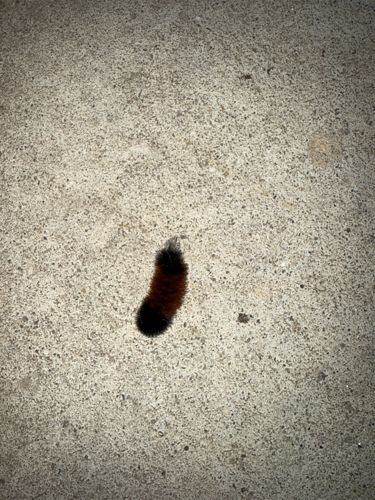
Woolly Bear Caterpillar
Pyrrharctia isabella
- Order & Family
- Order Lepidoptera, Family Erebidae
- Size
- Up to 2 inches (5 cm) in length
Natural Habitat
Fields, gardens, meadows, and roadsides throughout North America
Diet & Feeding
Generalist herbivore; feeds on various low-growing plants like dandelions, clover, plantain, and grasses
Behavior Patterns
Larvae are active in the fall searching for overwintering sites under leaf litter or logs. They can survive being frozen solid due to a natural cryoprotectant (glycerol) in their blood. Folklore suggests the width of their brown band predicts winter severity, though this is scientifically unfounded.
Risks & Benefits
Generally harmless to humans; the bristles are not venomous but can cause mild skin irritation/allergic reactions in sensitive individuals. Ecologically, they serve as a food source for birds and transition into the Isabella Tiger Moth, which acts as a pollinator.