
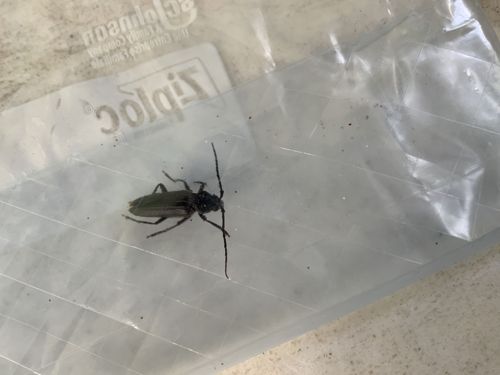
Longhorn Beetle (likely a Prionid species or similar large Cerambycid)
Various species within Cerambycidae (e.g., in genera like Prionus, Neandra, Ergates based on general appearance, but precise species identification from this image is difficult)
- Order & Family
- Order: Coleoptera, Family: Cerambycidae
- Size
- Typically 20-60 mm (0.8-2.4 inches) for larger species, some can exceed this.
Natural Habitat
Forests, woodlands, and areas with dead or decaying timber. Larvae live within wood. Adults are often found on or near host trees.
Diet & Feeding
Adults typically feed on sap, pollen, or may not feed at all. Larvae are wood-borers, feeding on dead or dying wood, sometimes live trees, depending on the species.
Behavior Patterns
Adults are nocturnal and attracted to lights. Larvae bore into wood, sometimes making audible chewing sounds. They can spend several years in the larval stage before pupating and emerging as adults.
Risks & Benefits
Risks: Larvae can cause significant damage to timber, wooden structures, and sometimes living trees, making them pests in forestry and urban environments. Benefits: As decomposers, their larvae play a role in breaking down dead wood, contributing to nutrient cycling in ecosystems.