
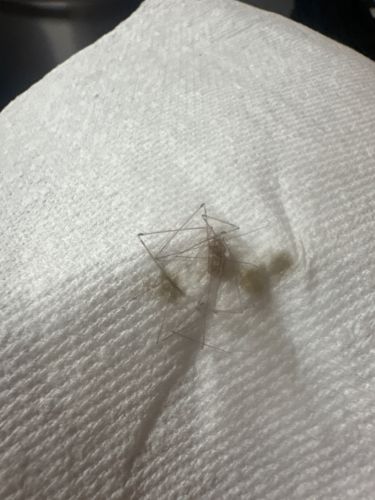
Daddy Long-legs or Harvestman
There is no single scientific name as 'Daddy Long-legs' refers to an entire order (Opiliones) with many species. Examples include Phalangium opilio.
- Order & Family
- Order: Opiliones (not true spiders, which belong to Order Araneae). Families vary widely within the order, some common ones include Phalangiidae and Sclerosomatidae.
- Size
- Body length typically ranges from 1 mm to 22 mm, but their leg span can be considerably larger, often reaching several inches (up to about 160 mm or 6.3 inches in some tropical species).
Natural Habitat
Harvestmen are found in a wide variety of habitats across the globe, especially in temperate and tropical regions. They prefer damp, dark, and sheltered environments such as under rocks, logs, leaf litter, in basements, caves, and other undisturbed areas in and around homes. They are often found in gardens and forests.
Diet & Feeding
Harvestmen are omnivores and scavengers. Their diet typically includes small insects (like aphids, small caterpillars, and mites), other arthropods (dead or alive), decaying plant and animal matter, fungi, and sometimes even small snails. They are beneficial for pest control in gardens.
Behavior Patterns
Daddy long-legs are known for their extremely long, thin legs and small, oval-shaped bodies. Unlike true spiders, their cephalothorax and abdomen are broadly joined, making them appear to have a single body segment. They do not produce silk or build webs for catching prey, though some species may build small, messy webs for resting or egg-laying. They are generally nocturnal. When threatened, they may vibrate their bodies rapidly, which can make them appear blurry to predators. They are also known to shed their legs if caught, which can continue to twitch for a short period, potentially distracting a predator while the animal escapes.
Risks & Benefits
Risks: There are no known risks to humans from Harvestmen. They are not venomous in a way that is harmful to humans, as they lack venom glands and fangs. The myth that they are the most venomous spider but cannot bite humans is untrue; they are not spiders and are not venomous. Benefits: Harvestmen are beneficial insects in an ecosystem, particularly in gardens. They help control populations of various small pests like aphids and mites. They also play a role as scavengers, helping to break down decaying organic matter, contributing to nutrient cycling.