
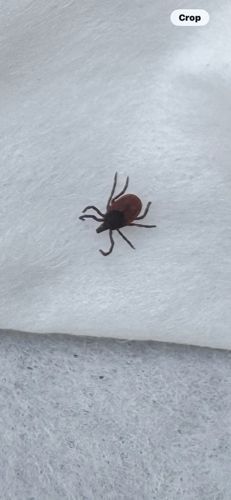
Tick (likely Deer Tick/Blacklegged Tick)
Ixodes scapularis (most probable, common in areas where these ticks are prevalent)
- Order & Family
- Order: Ixodida, Family: Ixodidae (Hard Ticks)
- Size
- Unfed adults typically range from 2mm to 4mm. Engorged females can swell up to 10mm or more.
Natural Habitat
Wooded areas, tall grasses, brush, leaf litter. They are often found in environments with abundant wildlife hosts.
Diet & Feeding
Blood of mammals (including humans), birds, and sometimes reptiles and amphibians. They are obligate hematophages, meaning they feed exclusively on blood.
Behavior Patterns
Ticks are not insects but arachnids. They undergo a four-stage life cycle: egg, larva, nymph, and adult. They practice 'questing' behavior, climbing onto vegetation and waiting for a host to pass by. Once a host is found, they attach and feed for several days until engorged. They are most active during warmer months but can be active whenever temperatures are above freezing.
Risks & Benefits
Potential Risks: Ticks are significant vectors for various pathogens, most notably Borrelia burgdorferi (Lyme disease), but also Anaplasma phagocytophilum (anaplasmosis), Babesia microti (babesiosis), and Powassan virus. Their bites can also cause local irritation or allergic reactions. Benefits: In natural ecosystems, ticks can be a food source for some birds and other predators, but their ecological benefits are generally outweighed by their role as disease vectors for humans and animals.