
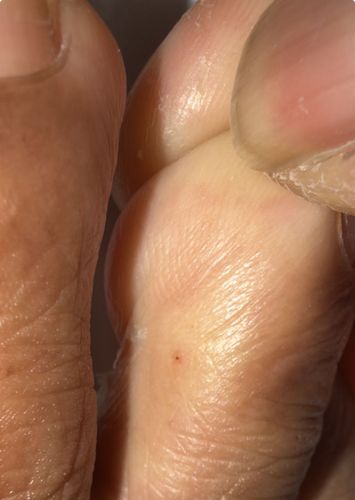
Chigoe flea (also known as sand flea, jigger, or nigua)
Tunga penetrans
- Order & Family
- Order: Siphonaptera, Family: Tungidae
- Size
- Typically 1 mm in length, but the gravid female can expand to the size of a pea (up to 10 mm) once embedded in host tissue.
Natural Habitat
Tropical and subtropical regions, particularly in sandy soil, dust, or dirt in warm environments like sub-Saharan Africa, Latin America, and the Caribbean.
Diet & Feeding
Males and non-breeding females feed on host blood. The mated female embeds herself in the host's skin (usually the feet) to feed on blood and nourish developing eggs.
Behavior Patterns
Unlike other fleas, the female Chigoe flea burrows into the host's epidermis. She stays attached for weeks, swelling as she produces eggs, which she then releases through a small opening in the skin before dying and being sloughed off.
Risks & Benefits
Risk: Causes tungiasis, an inflammatory skin disease characterized by intense itching, pain, and lesions. If untreated, it can lead to secondary bacterial infections like gangrene or tetanus. There are no known ecological benefits to humans.