
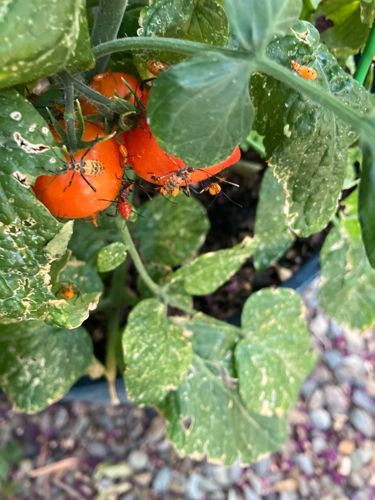
Leaf-footed Bug (Nymphs)
Leptoglossus species (e.g., Leptoglossus phyllopus or Leptoglossus clypealis)
- Order & Family
- Order: Hemiptera, Family: Coreidae
- Size
- Nymphs vary in size depending on their instars, typically ranging from a few millimeters up to 1-2 cm. Adult leaf-footed bugs are generally 1.5 to 2 cm long.
Natural Habitat
Gardens, agricultural fields, orchards, and areas with abundant host plants, particularly those producing fruits and seeds.
Diet & Feeding
Mainly plant sap, especially from developing fruits and seeds. They are known to feed on a wide variety of plants, including tomatoes, squash, beans, citrus, and other garden crops.
Behavior Patterns
Leaf-footed bugs undergo incomplete metamorphosis, meaning they hatch from eggs as nymphs that resemble smaller, wingless versions of the adults. They typically feed on fruits and seeds, using their piercing-sucking mouthparts. They can be found congregating in groups, especially nymphs as seen in the image, on host plants to feed. Adults can fly and are attracted to ripe fruits and vegetables.
Risks & Benefits
Risks: Considered significant agricultural pests as they can cause considerable damage to various crops by feeding on fruits, seeds, and sometimes stems. Their feeding can lead to malformed fruits, premature fruit drop, and tough, discolored spots on fruits, making them unmarketable. They do not pose a direct risk to humans (e.g., bites or stings). Benefits: None significant from an agricultural or human perspective; they are primarily pests.