
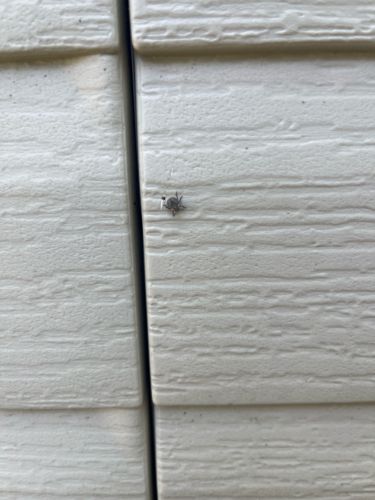
Arboreal Spider
Likely a species within the family Philodromidae or Thomisidae, but specific identification from this image is not possible.
- Order & Family
- Araneae (order), Philodromidae (family - Running Crab Spiders) or Thomisidae (family - Crab Spiders)
- Size
- Typically small, body lengths ranging from a few millimeters up to about 1 cm, not including leg span.
Natural Habitat
Found on various vertical surfaces like walls, fences, tree trunks, and sometimes rocks. They prefer outdoor environments but can sometimes be found on the exterior of buildings.
Diet & Feeding
Mainly insectivorous, feeding on small insects such as flies, gnats, and other arthropods that venture onto the surfaces where they reside. They use their specialized legs to capture and hold prey.
Behavior Patterns
Ambush predators, they typically sit and wait for their prey to come within striking distance. They often camouflage themselves on surfaces that match their appearance, blending in with the environment to surprise unsuspecting insects. When disturbed, they may remain motionless or attempt to crawl away. They undergo incomplete metamorphosis, with nymphs resembling smaller versions of the adults.
Risks & Benefits
Generally harmless to humans. While they possess venom, it is typically not potent enough to cause significant harm to people and they are not aggressive. They are beneficial in natural ecosystems as they help control populations of small insects.