
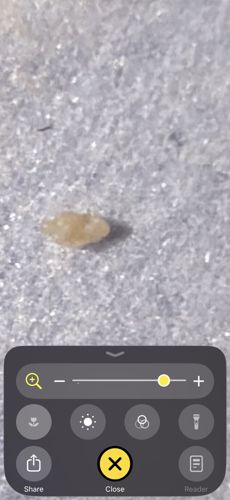
Community identification
Bed bug egg
Cimex lectularius
- Order & Family
- Order: Hemiptera, Family: Cimicidae
- Size
- Approximately 1 mm (similar to a grain of salt or two grains of sugar).
Natural Habitat
Typically found in human dwellings, hidden in cracks, crevices, mattress seams, and upholstery.
Diet & Feeding
The egg itself does not feed. The emerging nymph feeds on the blood of humans and other warm-blooded animals.
Behavior Patterns
Eggs are laid individually or in clusters, glued to surfaces with a sticky substance. They hatch in about 6 to 10 days depending on temperature.
Risks & Benefits
Risk: Indicates an active infestation. Bed bugs cause itching, red welts, and potential allergic reactions from bites. No ecological benefits within a human home environment.