
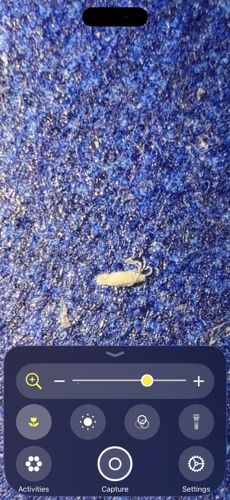
Community identification
Casemaking Clothes Moth (Larva)
Tinea pellionella
- Order & Family
- Lepidoptera, Tineidae
- Size
- Larval case is typically 1/4 to 1/2 inch (6 to 12 mm) long.
Natural Habitat
Dark, undisturbed areas within homes, closets, and storage areas; often found on natural fibers like wool, silk, or fur.
Diet & Feeding
Keratin-rich animal fibers including wool, hair, feathers, furs, and upholstered furniture. They do not eat synthetic fabrics unless blended with natural fibers.
Behavior Patterns
The larva constructs a portable silken case incorporating fibers from the material it is feeding on. It carries this protective case wherever it goes. The life cycle involves complete metamorphosis, but the larval stage is the only one that causes damage.
Risks & Benefits
They are serious household pests that can cause significant, irreversible damage to clothing, blankets, rugs, and heirlooms. They pose no direct health risk or physical danger to humans.