
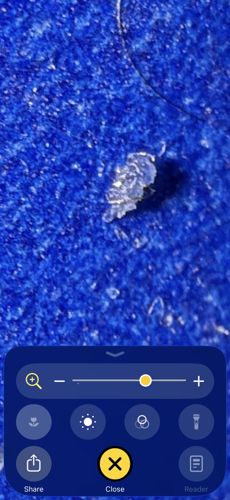
Community identification
Junk bug (Green lacewing larva)
Chrysoperla rufilabris (Common example)
- Order & Family
- Neuroptera: Chrysopidae
- Size
- 3 to 10 mm in length
Natural Habitat
Gardens, agricultural fields, and deciduous trees where prey like aphids are abundant.
Diet & Feeding
Carnivorous; feeds primarily on aphids, mealybugs, scale insects, and mites using hollow mandibles to suck out fluids.
Behavior Patterns
The larva is well-known for 'masking' behavior, where it attaches the carcasses of its prey and other environmental debris to its back using specialized hooked hairs (setae) for camouflage against predators like birds and ants.
Risks & Benefits
Highly beneficial to the ecosystem and gardeners as a biological pest control agent. They are harmless to humans, though they may occasionally deliver a minor, non-venomous pinch if handled.