
Community identification
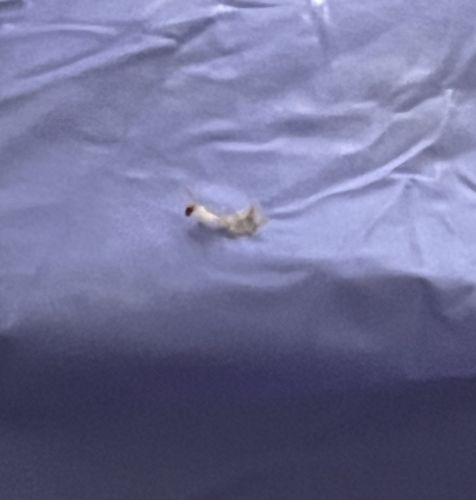
Casemaking Clothes Moth (Larva)
Tinea pellionella
- Order & Family
- Order: Lepidoptera, Family: Tineidae
- Size
- Case length is typically 8–10 mm (around 3/8 inch); the larva inside is slightly smaller.
Natural Habitat
Indoor environments, particularly in closets, drawers, or areas where natural fibers are stored.
Diet & Feeding
Larvae feed on keratin-containing animal products such as wool, fur, feathers, hair, and silk. They may also consume synthetic fibers if they are soiled with food or sweat.
Behavior Patterns
The larva constructs a silken case around itself, incorporating bits of fiber from what it is eating. It carries this case wherever it goes. Unlike other moths, they are photophobic (avoid light) and prefer dark, undisturbed areas.
Risks & Benefits
They are a significant household pest that can cause irreversible damage to clothing, upholstery, and carpets. They pose no direct health risk to humans, but can be a major economic nuisance.