
Community identification
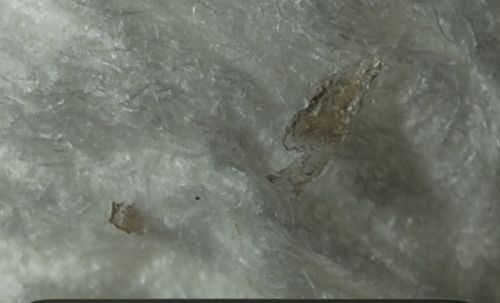
Head Louse (Nit/Egg Casing)
Pediculus humanus capitis
- Order & Family
- Order: Phthiraptera / Family: Pediculidae
- Size
- Nits are approximately 0.8 mm by 0.3 mm; adult lice are 2–3 mm long.
Natural Habitat
Exclusively on the human scalp and hair shafts, particularly near the neckline and behind the ears.
Diet & Feeding
Hematophagous (feed exclusively on human blood from the scalp).
Behavior Patterns
Lice cement their eggs (nits) firmly to hair shafts close to the scalp. They cannot jump or fly but crawl rapidly. The image likely shows an empty nit casing or a viable egg attached to fibers or hair.
Risks & Benefits
Risks: Intense itching and scalp irritation due to allergic reaction to saliva; potential secondary bacterial infection from scratching. They are not known to transmit disease, unlike body lice. Benefits: None known to humans.