
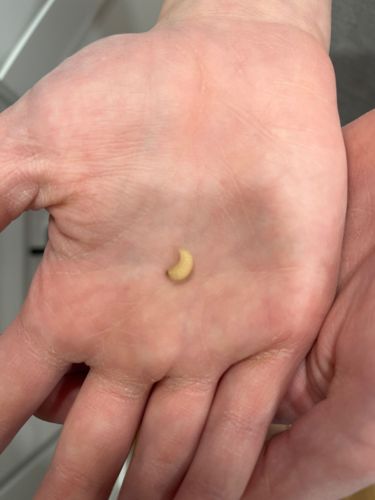
Indianmeal Moth Larva, Mealworm (general term for beetle larvae)
Plodia interpunctella (for Indianmeal Moth larva), Tenebrio molitor (common mealworm species)
- Order & Family
- Lepidoptera (moths and butterflies) for Indianmeal moth, Tenebrionidae (darkling beetles) for mealworms
- Size
- Typically 10-15 mm (0.4-0.6 inches) in length, but can vary depending on species and stage.
Natural Habitat
Found in stored food products such as grains, flours, cereals, dried fruits, nuts, and pet food.
Diet & Feeding
Feeds on a wide variety of dried food products, including grains, flour, cornmeal, seeds, dried fruits, nuts, pet food, and chocolate. They are known as pantry pests.
Behavior Patterns
Larvae are the damaging stage, consuming and contaminating food items. They spin silk webbing as they feed, which can be seen in infested products. They may crawl away from their food source to pupate in crevices or other sheltered spots. Adults are moths that do not feed, but lay eggs.
Risks & Benefits
Potential risks include contamination of food products, leading to spoilage and economic losses. They are not known to transmit diseases or bite humans. Benefits are generally none in a household setting, but some larvae (like true mealworms, Tenebrio molitor) are commercially raised as food for pets, livestock, and sometimes humans.