
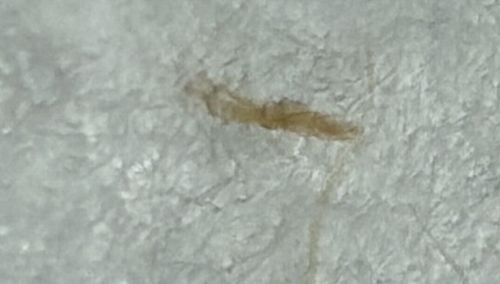
Community identification
Booklouse (or Psocid)
Liposcelis spp. (Family Liposcelididae is common indoors)
- Order & Family
- Order: Psocodea (formerly Psocoptera); Family: Liposcelididae (common indoor varieties)
- Size
- Tiny, usually 1 mm to 2 mm in length.
Natural Habitat
Found in damp, humid environments indoors such as basements, crawl spaces, and bathrooms; often hides in books, behind wallpaper, in cupboards near starches, or around molding.
Diet & Feeding
Feeds on microscopic molds, fungi, starch-based glues (like those used in book bindings and wallpaper), grains, and stored food products.
Behavior Patterns
They do not bite or fly (indoor species are wingless). They are moisture-loving and thrive in high humidity. Populations can grow rapidly if damp conditions persist.
Risks & Benefits
Generally harmless to humans and pets (no biting or stinging). However, they can contaminate dry food goods, trigger allergies in sensitive individuals, and are a nuisance pest indicating excessive moisture issues.