
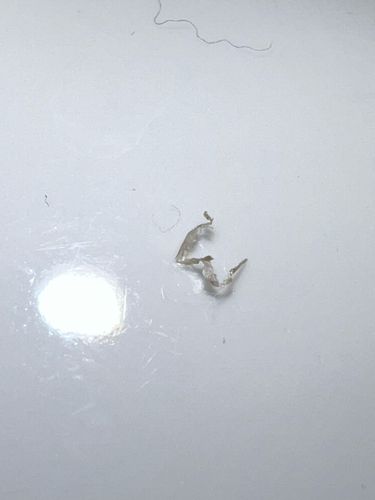
Community identification
Bagworm Moth Larva (Empty Casing)
Psychidae
- Order & Family
- Order: Lepidoptera, Family: Psychidae
- Size
- Cases typically range from 1/4 inch to 2 inches in length.
Natural Habitat
Found on a wide variety of host plants, most commonly on evergreens such as junipers, arborvitae, and pines, as well as deciduous trees.
Diet & Feeding
The larvae feed on the leaves or needles of their host tree, often defoliating branches if present in large numbers.
Behavior Patterns
Larvae construct spindle-shaped silken bags covered with bits of leaves, twigs, and bark from their host plant for protection and camouflage. They carry these bags with them as they feed and eventually pupate inside them.
Risks & Benefits
They are considered a minor to serious pest in residential landscapes and forests because heavy infestations can defoliate and kill host trees. They offer no direct benefits to humans, though they are a food source for certain birds and predatory insects.