
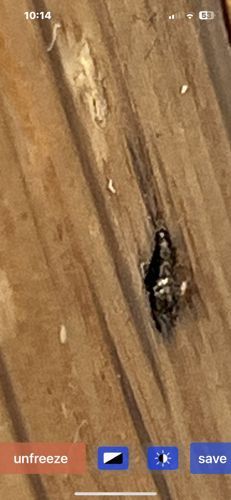
Ants (specifically carpenter ant or similar), with accompanying small white larvae/pupae
Formicidae (family) - specific genus/species is hard to determine from the image but could be Camponotus spp. (Carpenter Ants)
- Order & Family
- Order: Hymenoptera, Family: Formicidae
- Size
- Ant sizes vary greatly by species and caste. Workers can range from 2 mm to 25 mm (0.08 to 1 inch) in length. Carpenter ant workers typically range from 6 to 13 mm (0.25 to 0.5 inches). The visible ant in the image appears to be on the larger side, consistent with a carpenter ant.
Natural Habitat
Ants, especially carpenter ants, can be found in a wide variety of habitats. They often build nests in wood, particularly moist or decaying wood, both outdoors (tree stumps, logs) and indoors (wall voids, wooden structures). The image appears to show them in or near wood.
Diet & Feeding
Ants are omnivores. Their diet typically includes a wide range of foods such as sugars (honeydew from aphids, fruit juices), proteins (other insects, dead animals), fats, and sometimes fungi. Carpenter ants do not eat wood but excavate it to create nests; they forage for food elsewhere.
Behavior Patterns
Ants are social insects living in colonies with a caste system (queen, workers, males). Workers forage for food, care for the young (larvae and pupae, which are the small white objects seen in the image), and maintain the nest. The pictured scenario suggests a nest or foraging activity near an opening in the wood. Carpenter ants excavate galleries in wood to house their colony, pushing out sawdust-like material (frass) which can indicate their presence.
Risks & Benefits
Risks: Carpenter ants are considered pests, primarily because they can cause structural damage to wooden homes and buildings by tunneling through wood to create nests. While they don't eat wood, their tunneling weakens structures over time. They do not sting, but can bite if threatened. Benefits: In natural ecosystems, ants play roles as decomposers, predators of other insects (controlling pest populations), and seed dispersers.