
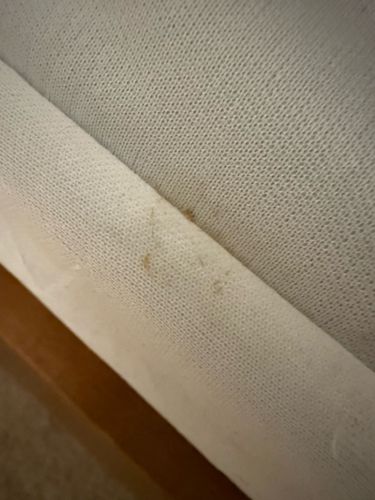
Bed bug (evidence)
Cimex lectularius
- Order & Family
- Hemiptera, Cimicidae
- Size
- Adults are typically 4-5 mm long (about the size of an apple seed). Nymphs are smaller, ranging from 1.5 mm to 4 mm.
Natural Habitat
Bed bugs are typically found in human dwellings, particularly in mattresses, bed frames, box springs, headboards, and other furniture near sleeping areas. They often hide in cracks, crevices, seams, and folds of fabric.
Diet & Feeding
Bed bugs are obligate hematophagous insects, meaning they feed exclusively on the blood of warm-blooded animals, primarily humans. They typically feed at night while a person is asleep.
Behavior Patterns
Bed bugs are nocturnal and highly elusive, hiding during the day and emerging at night to feed. They are attracted to carbon dioxide and body heat. The brown/reddish spots seen in the image are likely fecal spots (digested blood) which are a strong indicator of a bed bug infestation. Cast skins and live or dead bugs may also be present.
Risks & Benefits
Potential risks include itchy red welts from bites, allergic reactions in some individuals, and secondary skin infections from scratching. They are not known to transmit diseases. There are typically no known benefits of bed bugs to humans; they are considered a pest.