
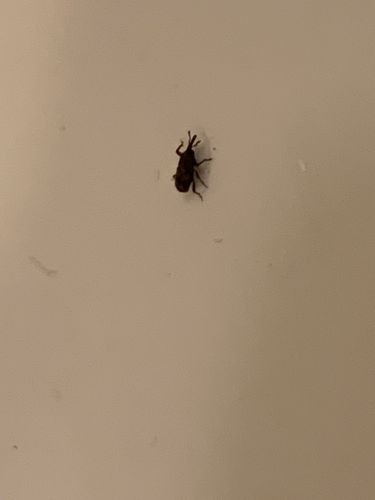
Weevil
Curculionidae
- Order & Family
- Order: Coleoptera, Family: Curculionidae
- Size
- Typically 3 mm to 10 mm, but can range from 1 mm to over 60 mm.
Natural Habitat
Highly varied, including forests, agricultural fields, gardens, and often found indoors in stored food products.
Diet & Feeding
Mostly herbivorous, feeding on various plant parts including seeds, fruits, roots, stems, and leaves. Some are specialists, feeding on specific plants or parts of plants, while others are generalists. Many are considered pests of stored grains and other food products.
Behavior Patterns
Many weevils are slow-moving. They can fly, but often remain hidden. Females lay eggs inside plant tissue or stored products. Larvae are typically legless grubs that feed within the plant or food item, pupating there as well. Adults emerge later.
Risks & Benefits
Risks: Many species are significant agricultural and household pests, causing damage to crops, stored grains, nuts, and other food items. They can contaminate food products. Benefits: Some species are used in biological control of invasive weeds. They also play a role in decomposition and nutrient cycling in ecosystems.