
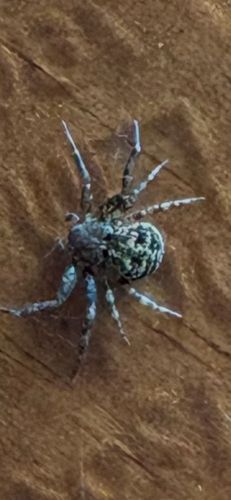
Orb Weaver Spider (likely Argiope, Neoscona, or a similar genus based on the web-building typical of this family and general body shape, though specific identification is difficult from this image alone)
Various genera within Araneidae (e.g., Argiope, Neoscona, Araneus, Eriophora). A precise species cannot be determined from the provided image.
- Order & Family
- Order: Araneae (Spiders), Family: Araneidae (Orb Weavers)
- Size
- Body size can vary significantly between species and sexes. Females are generally larger than males. Body length (excluding legs) can range from 4 mm to over 30 mm, with leg spans often exceeding 50-70 mm for larger species like those in the Argiope genus.
Natural Habitat
Orb weavers are found in a wide variety of habitats, including gardens, forests, fields, agricultural areas, and around human structures. They prefer areas with good anchor points for their webs, such as between trees, shrubs, tall grasses, or on porches and eaves of buildings.
Diet & Feeding
Strictly carnivorous. They primarily feed on flying insects such as flies, moths, mosquitoes, beetles, and even small butterflies, which get entangled in their sticky webs. Once prey is caught, the spider quickly wraps it in silk and delivers a venomous bite to immobilize it before consuming it or storing it for later.
Behavior Patterns
Orb weavers are known for spinning large, intricate, and often beautiful orb-shaped webs to catch prey. These webs are typically rebuilt daily, usually at night. They are mostly nocturnal but can be active during the day if prey is abundant or for web maintenance. They often rest head-down in the center of their web or hide in a nearby retreat, connected to the web by a signal line. They are generally not aggressive towards humans.
Risks & Benefits
Risks: Orb weaver spiders are generally not considered dangerous to humans. Their venom is potent enough for insects but is typically harmless to mammals, causing only mild, localized pain, redness, or swelling if a bite occurs (which is rare, as they are not aggressive). Benefits: They are highly beneficial as natural pest controllers, consuming large numbers of nuisance and potentially harmful flying insects. Their presence indicates a healthy ecosystem.