
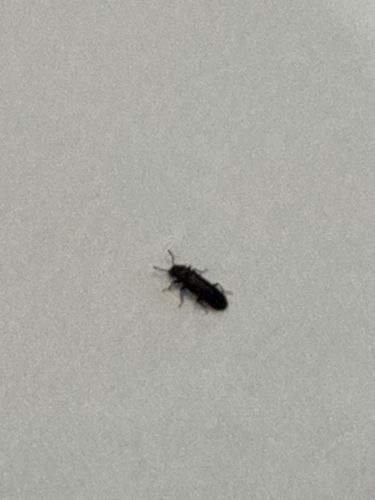
Red Flour Beetle or Confused Flour Beetle (likely)
Tribolium castaneum (Red Flour Beetle) or Tribolium confusum (Confused Flour Beetle) - difficult to distinguish precisely from the image provided, but both are very common.
- Order & Family
- Order: Coleoptera, Family: Tenebrionidae
- Size
- Approximately 2.5 to 5 mm long
Natural Habitat
Typically found in pantries, food processing plants, warehouses, and other areas where dried food products are stored. They thrive in warm, humid conditions.
Diet & Feeding
Primarily feeds on stored grain products such as flour, cereal, pasta, and pet food. They prefer processed grains to whole grains and can infest a wide variety of dried food products.
Behavior Patterns
Flour beetles are highly mobile and tend to avoid light. They can fly, but will typically crawl to find new food sources. Their larvae are active as well and can move between food sources. Due to their small size and ability to infest various stored products, they can be difficult to eradicate once established. They are known for releasing quinones, which give off a pungent odor and can taint infested products.
Risks & Benefits
Risks: Considered significant pests of stored food products globally. They can contaminate food with their bodies, feces, and defensive secretions (quinones), making it undesirable or unfit for consumption. They do not bite or sting humans and are not known to transmit diseases. Benefits: None significant to humans, although like all insects, they play a minor role in the broader ecosystem (e.g., as a food source for other animals).