
Community identification
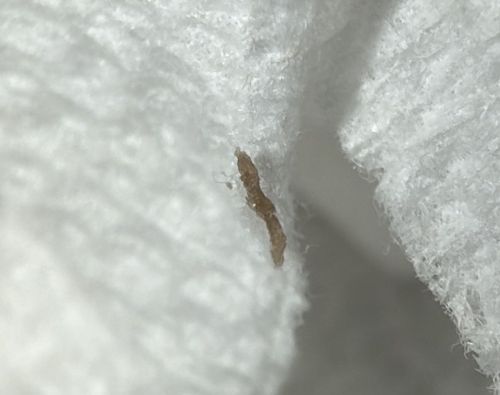
Webbing Clothes Moth (Larva)
Tineola bisselliella
- Order & Family
- Lepidoptera: Tineidae
- Size
- 1 mm to 12 mm depending on growth stage
Natural Habitat
Dark, undisturbed areas within human dwellings such as closets, chests, and storage areas containing natural fibers.
Diet & Feeding
Natural protein fibers including wool, silk, fur, feathers, and hair; they do not drink water and instead derive moisture from their food.
Behavior Patterns
Larvae spin silken tunnels or mats as they feed and move across fabric; they avoid light and are most active in darkened environments.
Risks & Benefits
They are serious household pests that cause significant damage to clothing, upholstery, and carpets; they pose no direct health risk to humans but can be costly to manage.