
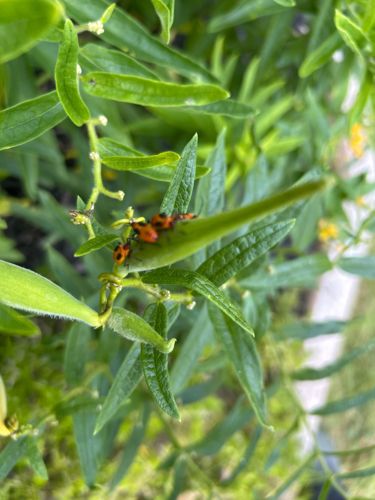
Milkweed Bug (likely Small Milkweed Bug or Large Milkweed Bug)
Oncopeltus fasciatus (Large Milkweed Bug) or Lygaeus kalmii (Small Milkweed Bug). Distinguishing between the two precisely from this image is difficult, but either is a strong possibility given the appearance.
- Order & Family
- Hemiptera, Lygaeidae
- Size
- Typically around 10-18 mm (0.4-0.7 inches) for Large Milkweed Bugs; Small Milkweed Bugs are slightly smaller, around 7-12 mm (0.3-0.5 inches).
Natural Habitat
Milkweed bugs are commonly found in fields, meadows, gardens, and along roadsides where milkweed plants grow. They are obligate associates of milkweed.
Diet & Feeding
Milkweed bugs are herbivorous, feeding primarily on the seeds of milkweed plants (Asclepias species). They use their piercing-sucking mouthparts to extract nutrients from the seeds and sometimes leaves and stems.
Behavior Patterns
They are often found in groups, especially during mating and feeding. They exhibit aposematism (warning coloration) to deter predators. Larvae and nymphs feed on plant sap and may aggregate.
Risks & Benefits
Potential Risks: Can be considered a minor pest in gardens if milkweed is being cultivated for ornamental purposes, as large populations can damage pods and reduce seed viability. However, they generally do not cause significant harm to the overall health of milkweed plants. Benefits: They are part of the natural ecosystem and food web. While they feed on milkweed, they are also a food source for other insects and birds. They can also aid in the dispersal of milkweed seeds.