
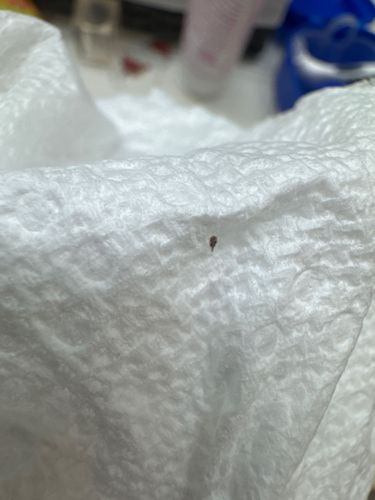
Flea (likely Cat flea or Dog flea)
Ctenocephalides felis (Cat flea) or Ctenocephalides canis (Dog flea)
- Order & Family
- Order Siphonaptera, Family Pulicidae
- Size
- 1.5 to 3.2 mm (0.06 to 0.13 inches)
Natural Habitat
Fleas typically live on the bodies of warm-blooded animals (mammals and birds). In the environment, they can be found in bedding, carpets, cracks in floors, and other sheltered areas within homes or outdoors where their hosts rest.
Diet & Feeding
Adult fleas are obligate hematophagous parasites, meaning they feed exclusively on the blood of their hosts. Larval fleas feed on flea dirt (feces of adult fleas, which consists of digested blood) and organic debris.
Behavior Patterns
Fleas are wingless insects known for their exceptional jumping ability, allowing them to move between hosts. They have a complete metamorphosis with four life stages: egg, larva, pupa, and adult. Females lay eggs on the host, which then fall into the environment. Larvae hatch and feed in dark, humid places. Pupae can remain dormant for extended periods, emerging as adults when they sense a suitable host through vibrations, heat, and carbon dioxide.
Risks & Benefits
Risks: Fleas are a nuisance to pets and humans, causing itchy bites and allergic reactions (flea allergy dermatitis). They can transmit diseases such as murine typhus and tapeworms (Dipylidium caninum) to pets and, in rare cases, to humans. Historically, fleas were vectors for the bubonic plague (Yersinia pestis). Benefits: No significant benefits to humans; some parasitic insects can be food sources for other animals in ecological webs, but fleas are primarily known for their parasitic nature.