
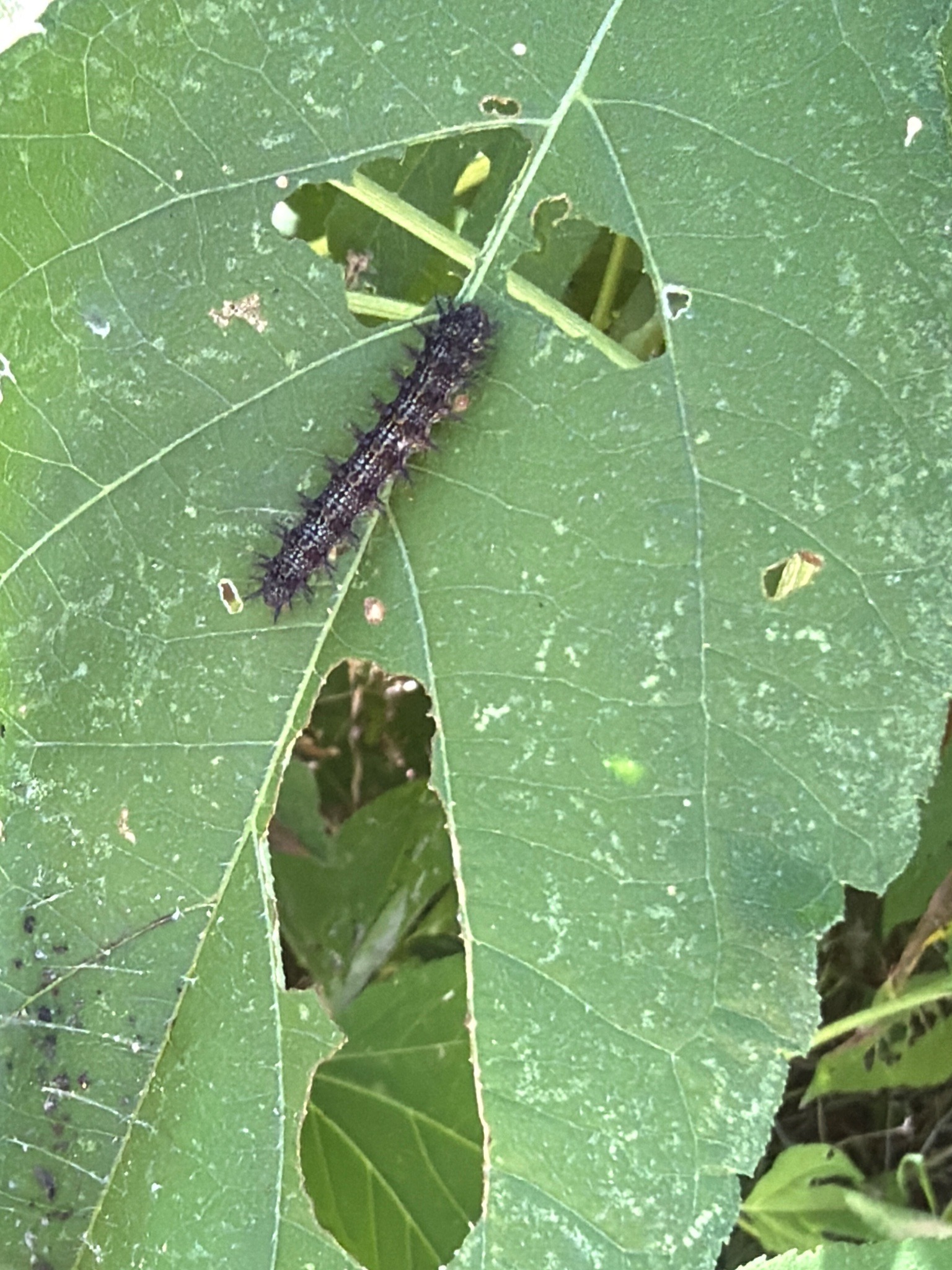
Community identification
Question Mark Caterpillar
Polygonia interrogationis
- Order & Family
- Lepidoptera: Nymphalidae
- Size
- 30 to 45 mm in length
Natural Habitat
Found in wooded areas, edges of forests, city parks, and suburban yards where host plants grow.
Diet & Feeding
Larvae feed on leaves of American Elm, Red Elm, hackberry, Japanese hop, nettle, and false nettle.
Behavior Patterns
The larva is solitary and nocturnal in later stages; it typically rests on the underside of a leaf during the day and feeds at night. The species undergoes a complete metamorphosis (egg, larva, pupa, adult).
Risks & Benefits
Generally harmless to humans; the spines may look intimidating but are not known to sting. They are beneficial pollinators as adults and serve as a food source for birds and predatory insects.