
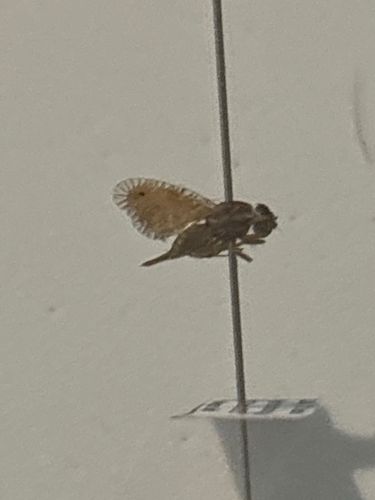
Whitefly
Aleyrodidae (family)
- Order & Family
- Hemiptera, Aleyrodidae
- Size
- Typically 1-3 mm
Natural Habitat
Found on the undersides of leaves of various plants, especially in greenhouses, gardens, and agricultural fields.
Diet & Feeding
Plant sap. They feed by inserting their stylets into the phloem of host plants and sucking out nutrients.
Behavior Patterns
Adults are typically active during the day, flying short distances when disturbed. They reproduce rapidly, laying eggs on the undersides of leaves. Nymphs (immatures) are scale-like and sessile, covered in a waxy secretion. They can transmit plant viruses and excrete honeydew, which leads to sooty mold growth.
Risks & Benefits
Risks: Major agricultural and horticultural pests, causing damage to crops by direct feeding (stunting growth, yellowing leaves), transmitting plant viruses, and promoting the growth of sooty mold on honeydew secretions. Benefits: No significant direct benefits to humans, though they can be food for some natural predators.