
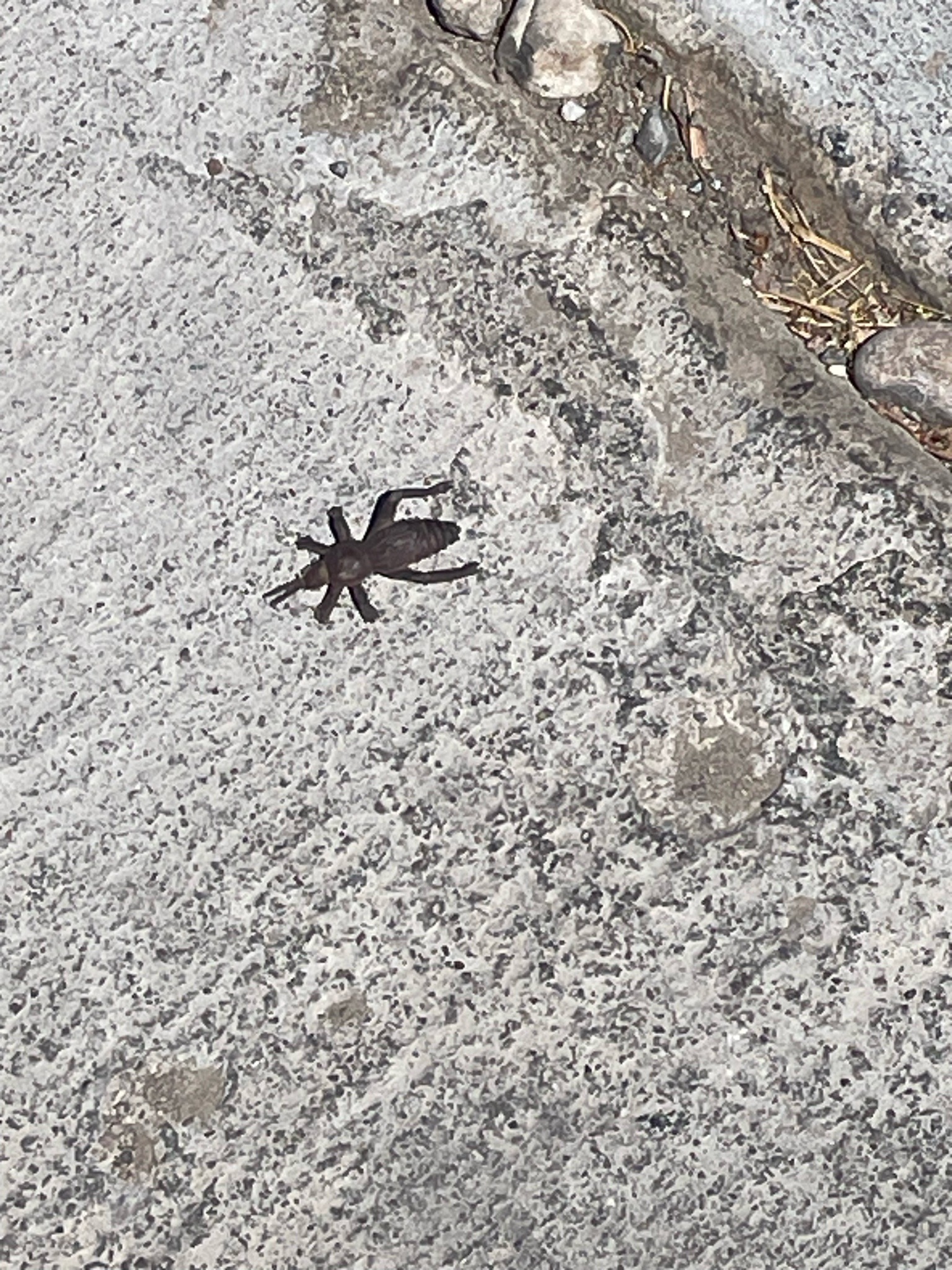
Community identification
Masked Hunter (Nymph)
Reduvius personatus
- Order & Family
- Order: Hemiptera, Family: Reduviidae
- Size
- 15 to 22 mm (approx. 0.6 to 0.9 inches) as adults, smaller as nymphs.
Natural Habitat
Typically found indoors in dry, dusty areas like basements, attics, or behind baseboards; also found outdoors in trees and shrubs.
Diet & Feeding
Strictly carnivorous; they hunt other small invertebrates including bed bugs, carpet beetles, termites, and earwigs.
Behavior Patterns
Nymphs are known for camouflaging themselves by covering their bodies with sticky secretions that trap dust, lint, and debris. They are nocturnal hunters that use a piercing-sucking beak to ambush prey.
Risks & Benefits
Benefits: Highly beneficial as a natural pest control agent, specifically known for hunting bed bugs. Risks: While not aggressive and not disease-carriers, they can deliver a painful bite to humans if handled or provoked, often compared to a bee sting.