
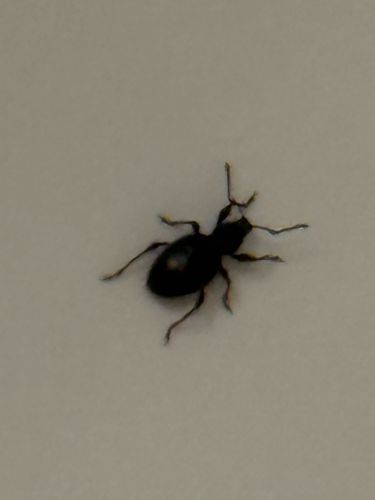
Weevil (Broad-nosed Weevil)
Curculionidae (specific genus and species cannot be determined from the image alone, but it belongs to this family)
- Order & Family
- Order: Coleoptera (Beetles), Family: Curculionidae (Weevils)
- Size
- Most weevils range from 1 mm to 60 mm (approximately 0.04 to 2.4 inches) in length, with many common species being in the 3-10 mm range. The specimen in the image appears to be in the smaller to mid-range for weevils, likely a few millimeters to about a centimeter.
Natural Habitat
Weevils are found in a wide variety of habitats globally, including agricultural fields, gardens, forests, grasslands, and even stored food products. Their specific habitat depends heavily on the host plant they feed on. Broad-nosed weevils often live on or near their host plants.
Diet & Feeding
Weevils are herbivorous. Depending on the species, their diet includes various plant parts such as leaves, stems, roots, seeds, fruits, and flowers. Many are host-specific, feeding on particular types of plants (e.g., grain weevils on grains, snouted weevils on specific trees/shrubs). The weevil in the image appears to be a broad-nosed weevil, which typically feeds on foliage of various plants.
Behavior Patterns
Adult weevils are generally slow-moving. Many species feign death when disturbed (thanatosis). Larvae are legless grubs that live concealed within plant material (stems, roots, seeds, fruits). The life cycle typically involves egg, larva, pupa, and adult stages.
Risks & Benefits
Risks: Many weevil species are significant agricultural pests, causing damage to crops (e.g., cotton boll weevil, grain weevils, rice weevil). Some can infest stored food products, leading to economic losses. Benefits: Some weevils are used as biocontrol agents against invasive weed species. They also play a role in seed dispersal for certain plants and contribute to the decomposition of plant material.