
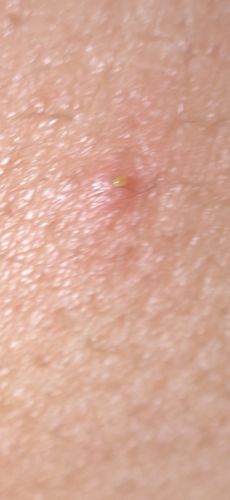
Community identification
Chigger (Larva)
Trombiculidae
- Order & Family
- Order Trombidiformes, Family Trombiculidae
- Size
- 0.2 mm to 0.4 mm (larval stage)
Natural Habitat
Low-lying, damp areas with thick vegetation, such as forests, grassy fields, gardens, and lake shores.
Diet & Feeding
Larvae feed on skin cells and lymph fluid; adults feed on insect eggs and small arthropods in the soil.
Behavior Patterns
The larvae wait on vegetation to climb onto a host. They do not burrow into skin but inject digestive enzymes that liquefy skin cells for feeding; they drop off after a few days.
Risks & Benefits
Causes intense itching and red welts in humans; while they generally do not transmit disease in the Americas, some species in Asia carry scrub typhus.