
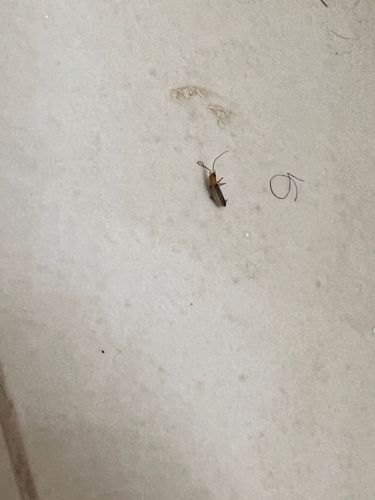
German Cockroach
Blattella germanica
- Order & Family
- Blattodea, Ectobiidae (formerly Blattellidae)
- Size
- 1.1 to 1.6 cm (0.43 to 0.63 inches) in length
Natural Habitat
German cockroaches primarily inhabit indoor environments, particularly kitchens and bathrooms where there is access to food, water, and harborage. They prefer warm, humid areas and can be found in cracks and crevices, behind appliances, in cabinets, and under sinks.
Diet & Feeding
Omnivorous scavengers. They eat almost anything, including food scraps, grease, starches, sweets, meats, and even non-food items like glue, soap, and hair. They are particularly drawn to fermenting foods and sugary substances.
Behavior Patterns
Cockroaches are primarily nocturnal and highly secretive, preferring to hide in dark, moist places during the day. They are fast runners and can exhibit thigmotaxis, meaning they prefer to be in close contact with surfaces, often squeezing into tight cracks and crevices. They are social insects and often aggregate in groups, communicating through chemical signals.
Risks & Benefits
Potential risks include being a vector for pathogens (bacteria, viruses, fungi, protozoa) that cause food poisoning and other diseases, triggering asthma and allergies due to their droppings and shed skins, and contaminating food preparation surfaces and food. There are no known direct benefits to humans, but they play a minor role as decomposers in some ecosystems when outdoors.