
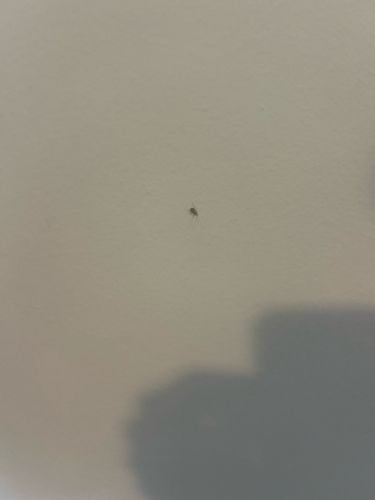
Fungus Gnat (likely)
Sciaridae (family), Mycetophilidae (family), or Chironomidae (family) - difficult to specify without clearer image
- Order & Family
- Order Diptera, Families Sciaridae, Mycetophilidae, or Chironomidae (non-biting midges)
- Size
- 2-8 mm
Natural Habitat
Damp environments, often associated with potting soil of houseplants, decaying organic matter, sewage treatment plants, or damp areas in homes. Non-biting midges (Chironomidae) are also found near water bodies.
Diet & Feeding
Larvae feed on fungi, decaying plant matter, and sometimes plant roots. Adults generally do not feed or feed on liquids.
Behavior Patterns
Adults are weak flyers and often seen hovering in swarms or resting on surfaces near their breeding sites. They are attracted to light. Larvae live in moist soil or decaying organic matter. Their lifecycle is relatively short, from a few days to a few weeks.
Risks & Benefits
Potential risks include being a nuisance, especially in large numbers. Fungus gnat larvae can damage plant roots, particularly in seedlings or tender plants. They do not bite humans or transmit diseases. Benefits are limited, though their larvae can contribute to decomposition of organic matter in outdoor environments.