
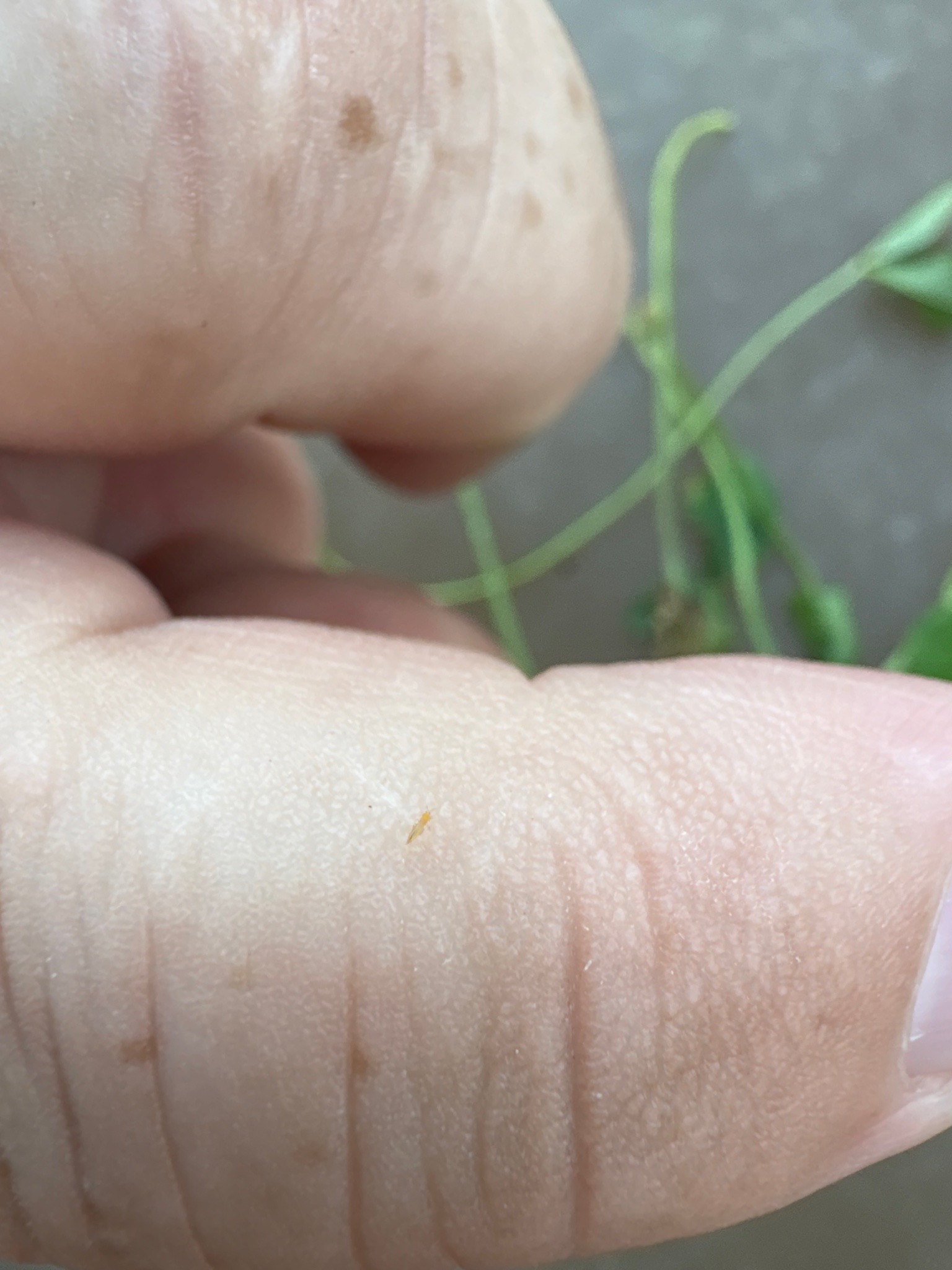
Community identification
Thrips (specifically a species common in gardens/greenhouses)
Order Thysanoptera
- Order & Family
- Order Thysanoptera, various families like Thripidae
- Size
- Commonly 0.5 to 2.0 mm in length; extremely small and slender.
Natural Habitat
Widely distributed on plants, flowers, leaves, and inside structures like greenhouses and homes.
Diet & Feeding
Mostly herbivorous, feeding on plant sap by piercing cells and sucking out the contents. Some species are predatory.
Behavior Patterns
Thrips often congregate in flowers or on the undersides of leaves. They are capable of sudden, jerky movements and can fly or be carried long distances by wind.
Risks & Benefits
Generally harmless to humans but can cause minor skin irritation or 'bites' when exploring. Primarily considered agricultural pests as they damage crops and ornamentals, and can transmit plant viruses. However, predatory thrips can be beneficial for biological pest control.