
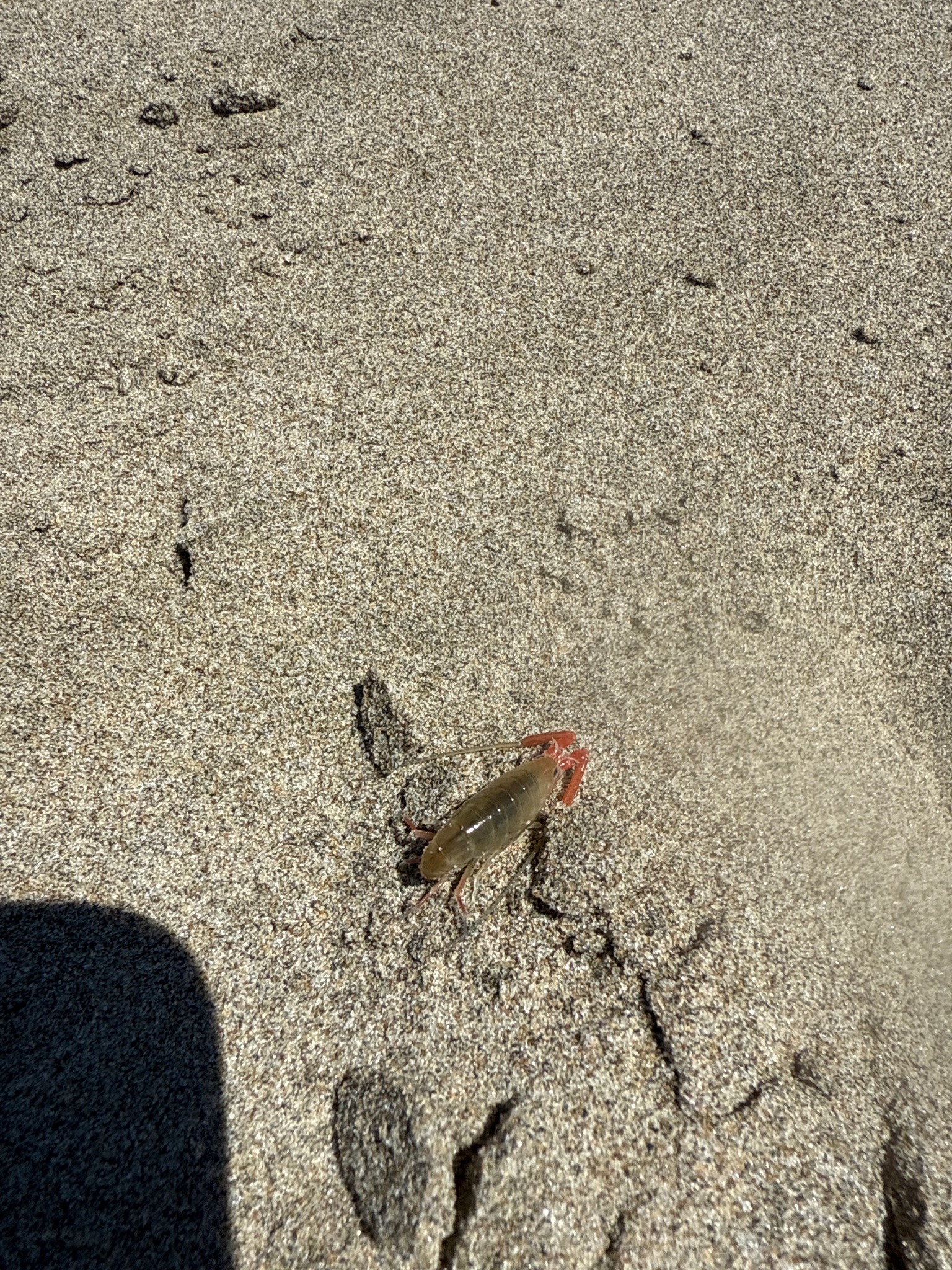
Community identification
Sand Hopper (or Beach Flea)
Megalorchestia californiana
- Order & Family
- Order: Amphipoda, Family: Talitridae
- Size
- Typically 15 to 25 millimeters in length.
Natural Habitat
Found on sandy beaches, typically buried in the sand or under washed-up kelp (wrack) near the high-tide line.
Diet & Feeding
Scavenger; primarily feeds on decaying seaweed (kelp) and other organic debris washed ashore by the tide.
Behavior Patterns
They are nocturnal to avoid predators and desiccation, and are known for their ability to jump long distances by suddenly extending their abdomens. They spend most of the daylight hours buried in moist sand.
Risks & Benefits
They pose no risk to humans as they do not bite or sting. They are beneficial to the ecosystem as primary decomposers of beach wrack and serve as a vital food source for shorebirds.